Can Foggy Windows Be Repaired Without Replacement?
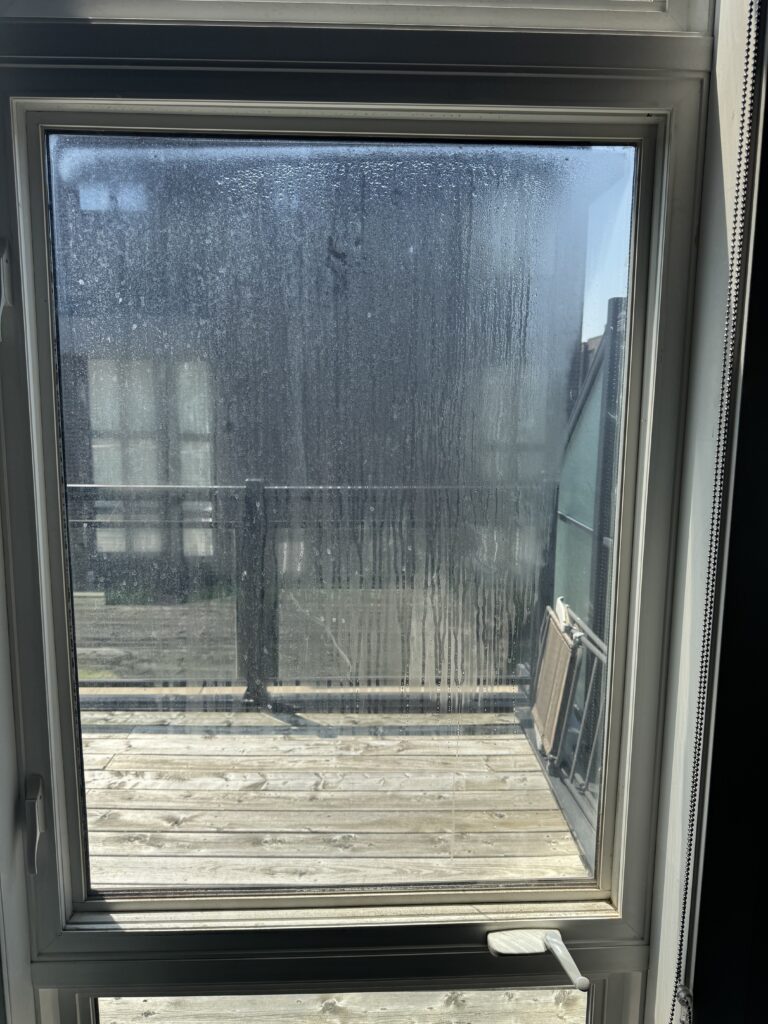
You look over at your window one morning and notice it: a hazy, cloudy patch trapped somewhere between the panes, the kind of fog that no amount of glass cleaner will touch. If your first thought was “well, I guess I need a new window,” you’re not alone. It’s one of the most common assumptions homeowners across Toronto make, and it’s also one of the most common places people end up spending far more than they actually needed to.
Here’s the reassuring answer: in most cases, foggy windows can be repaired without replacing the entire unit. The issue almost always lives inside the sealed glass itself, not in the frame, sash, or hardware around it. At Revitalize Windows & Doors, this is one of the most common calls we get, and it’s rarely as serious as people initially assume. If you’re dealing with hazy glass right now, our glass repair and replacement services are built specifically to handle this issue.
1. What’s Actually Happening Behind That Fog
Most modern windows use what’s called an insulated glass unit, or IGU: two or more panes of glass sealed together with a gap in between, usually filled with air or an insulating gas like argon. That sealed pocket of gas is what gives your window its energy efficiency, keeping warm air in during winter and out during summer.
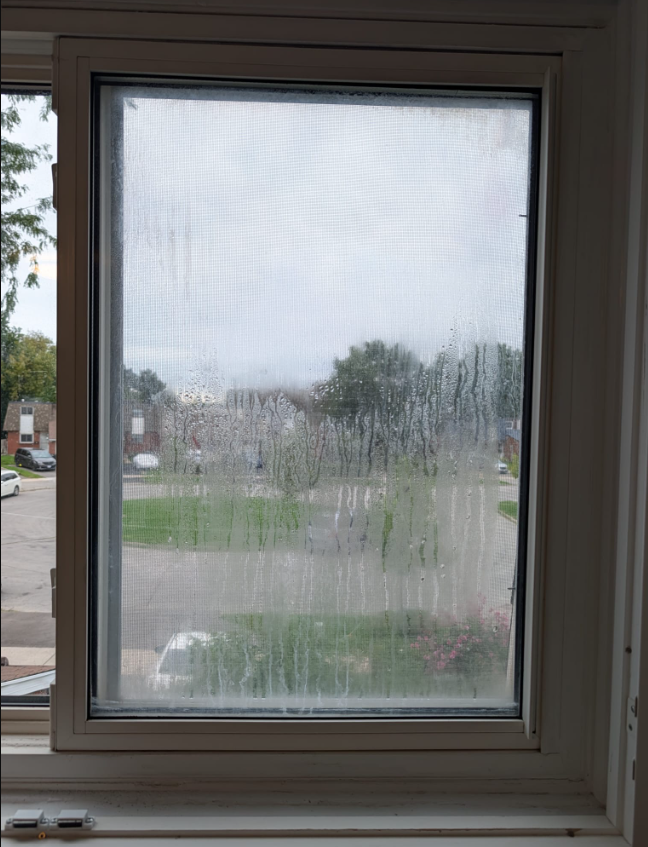
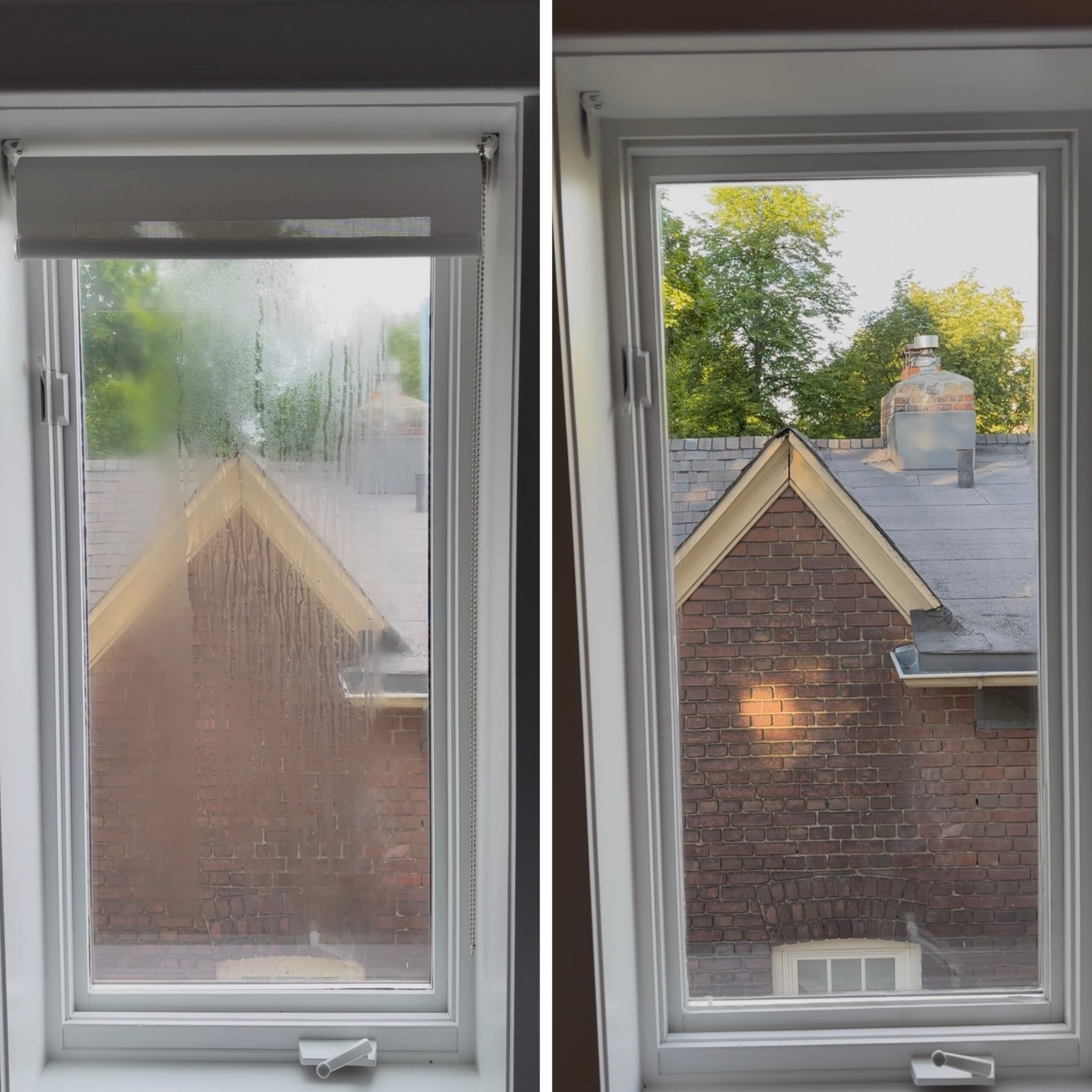
The fog appears when that seal eventually fails. Once it’s compromised, humid outside air slips into the sealed gap between the panes. Because that space is enclosed, the moisture has nowhere to escape, so it condenses on the inner glass surfaces, creating a cloudy haze that’s completely out of reach from either side of the window.
2. Why the Seal Fails in the First Place
A few specific factors tend to drive seal failure over time:
Simple age. Most manufacturers rate their seals to last somewhere between 10 and 20 years, depending on the quality of the original build.
Our climate’s temperature swings. Toronto sees a genuinely wide seasonal range, from well below freezing in January to over 30°C in the summer months. Every one of those swings puts stress on the seal material, and that repeated expansion and contraction wears it down faster than a milder climate would.
Manufacturing or installation issues. Occasionally a unit fails early, sometimes fogging within just a few years, due to how it was originally built or installed.
Physical stress. A minor impact, or the gradual settling of a window frame within the wall, can be enough to stress and eventually compromise a seal ahead of schedule.
3. The Part Most People Get Wrong: The Frame Is Usually Fine
This is the single most important thing to understand here. In the overwhelming majority of foggy window cases, the frame, sash, hardware, and overall structure of the window are completely unaffected. The problem is isolated to the sealed glass unit itself.
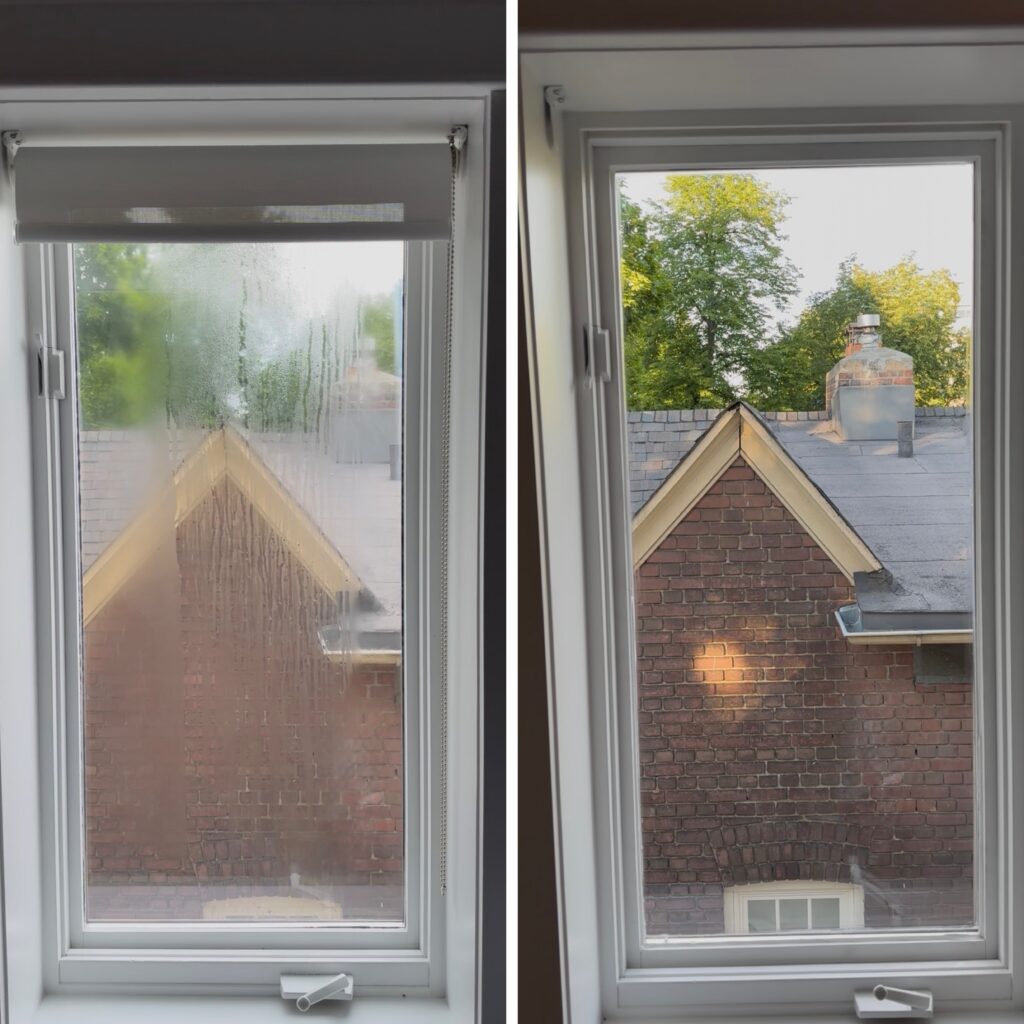
That means the glass can typically be removed and replaced within the existing frame and sash, restoring both the clear view and the original energy performance, without touching anything else about the window. It’s a far less invasive, and far less expensive, path than tearing out and replacing the entire unit.
4. What Actually Happens During a Glass Repair
Knowing the steps involved helps explain why this is usually a routine repair rather than a major project.
Matching the existing specs. The current glass unit’s exact dimensions, thickness, and glass type, whether tempered, low-E coated, or gas-filled, get measured and matched so the replacement fits precisely.
Removing the failed unit. The sash is opened, and the old glass unit is carefully taken out along with any glazing tape or sealant holding it in.
Installing the new sealed unit. A newly manufactured IGU, built to the original specifications, is set into the sash and properly sealed.
Weatherproofing and cleanup. The unit gets sealed back into place to guard against moisture and drafts, restoring full performance to the window.
For a standard residential window, this whole process is usually finished in a single visit, with no changes needed to the surrounding frame, trim, or wall.
5. When Full Replacement Is Actually the Better Call
Glass-only repair is the right move in most situations, but there are a few cases where replacing the entire window genuinely makes more sense:
- The frame has structural damage, such as rot, significant warping, or cracking that affects how well the window seals or functions.
- The window is seriously outdated, using older single-pane or early double-pane glass that falls well short of today’s energy standards, in which case a glass-only swap wouldn’t solve the underlying performance gap.
- Several windows are fogging at once, which can sometimes be a good moment to think about a broader energy efficiency upgrade instead of repairing units one at a time.
- Hardware and mechanical parts are failing too, where the combined cost of repairing everything individually starts approaching what a full replacement would cost.
If your situation fits one of these, we’ll tell you plainly. Our priority is solving the actual problem in front of us, not steering every call toward the most expensive option available.
6. Does the Window’s Age Change the Math?
Not as much as you’d think. What matters most is the condition of the frame and sash, not the age of the glass itself. If the frame is structurally sound and the hardware still works properly, replacing just the glass unit is almost always the more cost-effective route, even on a window that’s been in place for 20 or 30 years.
The one exception is if you’re hoping to meaningfully upgrade the window’s overall energy performance, such as moving to a modern triple-pane system or an advanced low-E coating that simply wasn’t available when the original window went in. In that case, full replacement may fit better into a broader energy efficiency plan than restoring the existing unit to its original spec would.
7. Can You Keep This From Happening Again?
No seal lasts forever, but there are a few things that help extend the life of a repaired glass unit:
- Choose a quality replacement unit rather than the cheapest option available, since seal quality is the biggest factor in how long the repair actually holds up. This is something the team at Revitalize Windows & Doors always walks customers through before any installation begins.
- Stay on top of caulking and weatherstripping around the frame, since a poorly sealed frame lets more moisture reach the glass seal over time.
- Deal with frame issues early, since a shifting or settling frame adds stress to the glass seal that can shorten its lifespan.
If foggy glass is showing up in more than one spot around your home, our window and door repair services across the GTA can take a full look at the property and help you figure out whether individual repairs or a broader upgrade is the smarter path forward.
Key Terms Worth Knowing
Insulated Glass Unit (IGU): A sealed assembly of two or more glass panes with a gas-filled or air-filled gap between them, built to improve insulation. Fogging happens when this seal fails.
Seal Failure: The breakdown of the airtight seal between panes in an IGU, letting humid air into the sealed gap where it condenses on the interior glass surfaces.
Low-E Coating: A thin, nearly invisible metallic coating applied to glass to cut down on heat transfer, standard in most modern energy-efficient windows.
Glazing: The process of setting glass into a window sash or frame, and also a term for the glass component itself.
Argon Gas Fill: An inert gas often used to fill the gap between panes in an IGU for better insulation than air alone. It escapes gradually once a seal fails.
A Common Myth: “A Little Fog Isn’t Worth Worrying About”
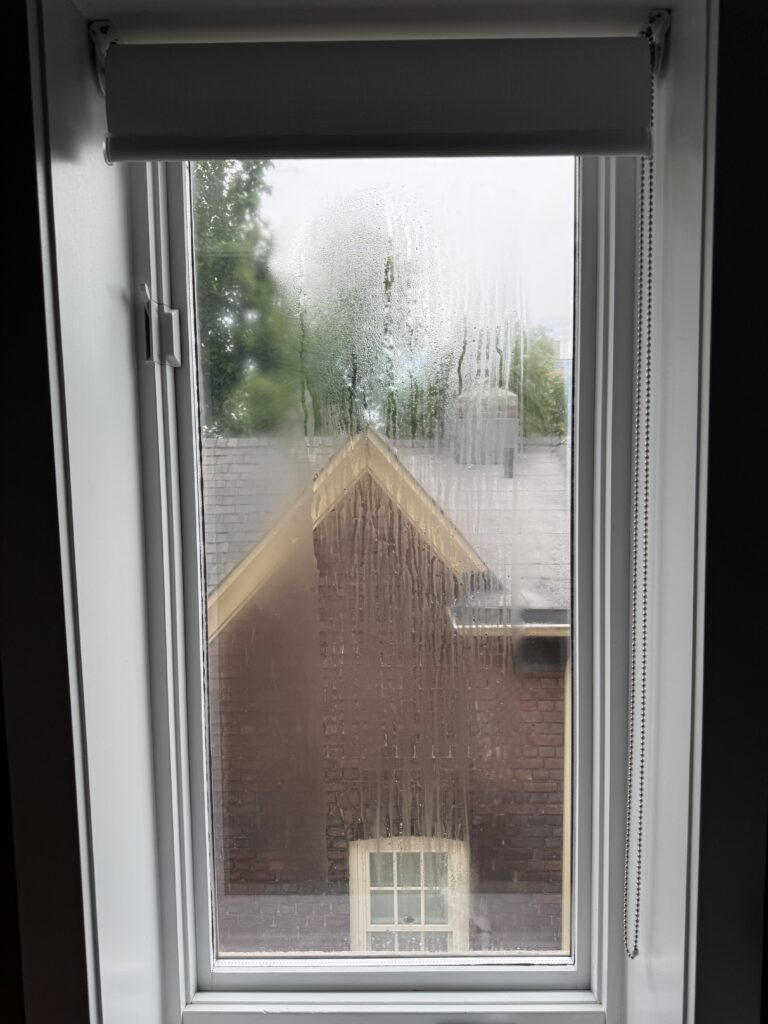
It’s tempting to leave a mildly foggy window alone, especially if the haze is subtle and the window still opens and closes just fine. But once a seal has failed, a couple of things are already in motion beyond the cosmetic issue.
If your window originally had an insulating gas fill, it’s already begun escaping, meaning the energy efficiency has already dropped even if the fog itself looks minor. Left alone long enough, the trapped moisture can also lead to mineral deposits or etching on the interior glass surfaces, which can eventually leave the glass permanently cloudy even after a repair, if it sits too long.
Addressing it sooner rather than later usually means a simpler, less costly repair, and avoids an extended stretch of reduced energy performance while the issue goes unaddressed.
Why This Shows Up So Often in Toronto
Given how wide our seasonal temperature swings run here, window seals across Toronto face more cumulative stress than they would in a milder region, which goes a long way toward explaining why seal failure and foggy glass are such a common issue for homeowners throughout the city. The upside is that this also means glass-only repair is a well-established, routine service in this market, not some rare or specialized request.
Why Revitalize Windows & Doors Is the Right Call
We’ve replaced foggy glass units in homes all across Toronto, from newer builds still within their original warranty period to older properties with windows that have been in place for decades. We always confirm the frame and hardware are in solid condition before recommending a glass-only repair, so you’re not stuck facing the same problem again a year or two down the line.
How We Can Help You Today
- Glass unit replacement for foggy or fogged double and triple-pane windows
- Full window assessment to determine repair versus replacement
- Upgraded low-E and gas-filled glass options for better energy efficiency
- Frame and hardware inspection alongside glass repair
- Whole-home glass repair for properties with multiple affected windows
Frequently Asked Questions
Can I clean the fog off myself? No. The fog sits trapped inside a sealed glass unit, between the panes, so it can’t be reached from either the interior or exterior surface. The seal itself needs to be addressed directly.
How does the cost of glass repair compare to a full window replacement? Glass-only repair typically costs significantly less than a full window replacement, since it only involves the sealed glass unit rather than the frame, sash, and hardware.
Will the new glass fog up again down the road? With a properly installed, quality replacement unit, the new seal should perform much like a brand-new window’s seal, generally lasting well over a decade before there’s any concern of failure.
Does foggy glass point to a bigger issue with my window? Usually not. In most cases, it’s an isolated seal failure that has nothing to do with the condition of the frame or hardware, though it’s still worth having the full window checked.
Can foggy windows raise my energy bills? Yes. Once the seal fails, the insulating gas fill escapes and the window’s thermal performance drops, which can contribute to higher heating and cooling costs until it’s repaired.
Ready to Get Your Foggy Windows Sorted?
If you’ve been putting off dealing with hazy glass because you assumed a full window replacement was your only option, we’re happy to take a look and let you know if a simpler glass repair will do the job just as well. Contact us directly to request your free quote, and we’ll help bring the clear view and efficiency back to your windows.