
What Are the Signs My Window Seals Have Failed?
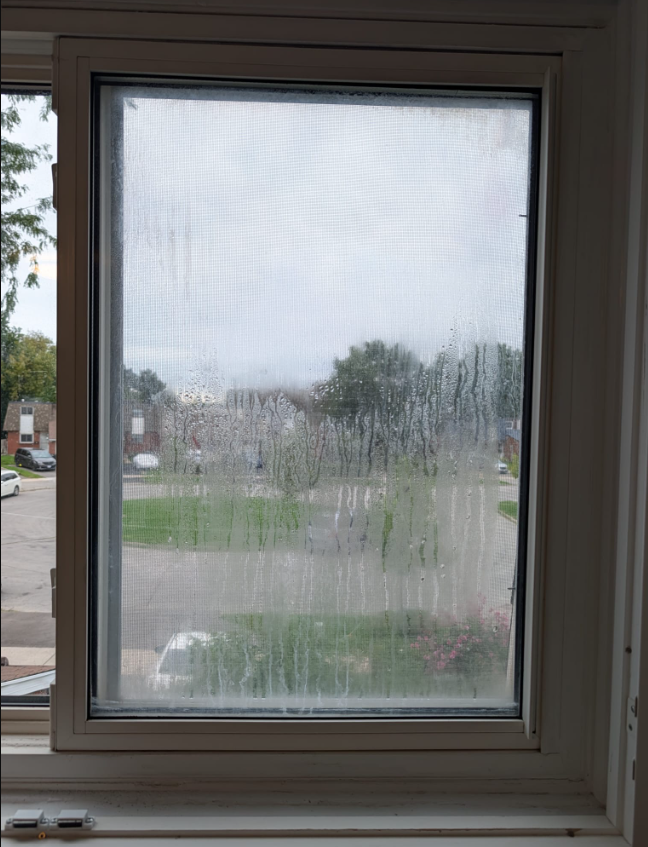
You wipe the glass, step back, and the smudge is still there. Not on the inside, not on the outside, but somewhere in between. If that sounds familiar, you are almost certainly looking at a failed window seal, and you are far from alone. It is one of the most common questions we hear from homeowners across Toronto and the GTA, so let’s answer it plainly, including the parts other companies tend to skip.
First, What Is a Window Seal Anyway?
Most modern windows use a sealed glass unit: two (sometimes three) panes of glass separated by a thin spacer bar, with a sealant running around the edges. The space between the panes is filled with dry air or an insulating gas like argon. That sealed pocket is what gives your window its insulating value.
When the seal is intact, moisture stays out and the gas stays in. When it fails, humid air sneaks into the gap, the insulating gas slowly escapes, and the window stops doing its job. The glass itself is usually fine. The seal is the weak link.
The Signs Your Window Seals Have Failed
1. Fog or condensation between the panes
This is the classic. You see a cloudy film, water droplets, or a hazy patch trapped between the glass layers. It often shows up first on hot, humid summer mornings or right after a cold snap, then comes and goes. Eventually it stays.
The key detail: you cannot wipe it away because it is not on a surface you can reach. If you can clean it, it is regular condensation. If you cannot, the seal has let moisture in.
2. Permanent streaks, spots, or a milky haze
Once moisture has been inside the unit for a while, it leaves mineral deposits behind as it evaporates and returns. Those show up as white streaks, water-spot patterns, or a dull film that looks like the glass is dirty from within. Even when the fog clears on a dry day, these marks remain.
3. A draft or cold spot near the window
Stand next to the window on a cold January day and hold your hand near the glass. A noticeably colder pane than its neighbours, or a slow trickle of cool air, points to reduced insulation. Sometimes the culprit is the frame or weatherstripping instead, which we will get to below. But when the glass itself feels icy, the gas fill has probably escaped.
4. Frost or ice forming on the inside of the glass
Seeing frost on the interior side during a Toronto winter is a strong signal that the window is no longer insulating properly. A healthy double-pane unit keeps the inside surface warm enough to avoid this in normal conditions. Frost means the glass is getting far too cold, far too fast.
5. Your heating and cooling bills creep up
This one is harder to pin on a single window, but it adds up. If you have several failed units, your furnace and air conditioner work harder to make up for the lost insulation. Homeowners often notice a room that never quite gets comfortable, no matter what the thermostat says.
6. Visible gaps, cracks, or shrunken sealant at the edges
Look closely at the perimeter of the glass where it meets the spacer. You may see dried, cracked, peeling, or pulled-away sealant. Sometimes there is a tiny gap you can slide a fingernail into. That is the seal literally opening up.
7. A slightly distorted or wavy view
This one is less common, but a warped reflection can mean the panes are flexing because the pressure inside the unit has changed. It is worth a closer look, especially in older units.
Quick At-Home Tests You Can Try
You do not need tools to check.
- The wipe test. Clean both sides of the glass. If the haze remains, it is inside the unit.
- The flashlight test. Shine a light across the glass at an angle in a dim room. Mineral streaks and haze show up clearly.
- The morning check. Look at the window early in the day when temperature swings are biggest. Fog often appears then and fades by afternoon.
- The touch test. Compare the temperature of the glass with the window beside it on a cold day.
If two or more of these point the same direction, you have your answer.
Why Do Window Seals Fail Around Toronto and the GTA?
Our climate is tough on windows. A single year here can swing from minus twenty in February to thirty-plus in July, and every swing makes the glass and frame expand and contract. Over time, that movement tires out the sealant.
A few other common causes:
- Age. Most sealed units last somewhere between 10 and 25 years, depending on quality.
- Sun exposure. South- and west-facing windows take a beating from UV and heat.
- Wind pressure. High-rise and condo windows across Toronto deal with constant pressure changes.
- Installation issues. Poorly supported glass or frames that shift can stress the seal early.
- Manufacturing defects. Occasionally a unit is simply built with a weak seal from day one.
Can You Fix a Failed Window Seal Yourself?
Here is where we will be straight with you, because you deserve honest information before you spend a dollar.
You will find “defogging” kits and injection services online. They drill a tiny hole, clear the moisture, and sometimes add a vent. They can make the window look clear for a while, but they do not restore the original seal or the insulating gas. Many homeowners find the fog returns, and the window still performs poorly. We consider that a temporary cosmetic fix at best.
What you can do yourself:
- Re-caulk the exterior frame if the caulking has cracked or shrunk.
- Replace worn weatherstripping around the sash.
- Check that the weep holes at the bottom of the frame are not clogged with debris.
Those steps help if your problem is a drafty frame. They will not fix a truly failed sealed glass unit.
What Is the Real Fix?
The proper solution is replacing the sealed glass unit, not the entire window. If your frame is in good shape and the operation is smooth, there is no reason to rip out the whole thing. Swapping just the failed glass is faster, less disruptive, and typically costs far less than full window replacement.
This is exactly the kind of work we handle every week at Revitalize Windows & Doors. Our foggy and broken window glass repair service covers measuring the existing unit, ordering a new one built to spec, and installing it in your existing frame. No demolition, no drywall repair, and no need to redo your interior trim.
Before you call anyone, check whether your windows are still under warranty. Many manufacturers cover sealed glass units for 10 to 20 years, and some warranties transfer to new owners. It is worth a look at your paperwork.
Repair the Glass or Replace the Whole Window?
Here is how we think about it, without any sales pressure:
Replace only the glass unit when:
- The frame is solid, straight, and not rotting or warped.
- The window opens, closes, and locks properly.
- The only problem is fog, haze, or lost insulation.
Consider a full window replacement when:
- The frame is rotted, cracked, or badly damaged.
- The window is very old and hardware is failing across the board.
- You are already planning a major renovation or want a different style.
For most homeowners we meet in Toronto, glass replacement is the smarter, more affordable move.
What Happens If You Ignore It?
Nothing dramatic overnight, but a failed seal does not heal itself. Over months and years:
- The fog and staining tend to get worse.
- Heat loss and drafts continue, and so do the higher bills.
- Moisture can, in some cases, contribute to deterioration around the edges of the glass.
- Your home’s curb appeal takes a hit, which matters if you plan to sell.
Fixing it early usually means a simpler, cheaper job.
Common Questions We Hear
Is a failed seal dangerous? Not in a safety sense. It is an efficiency and appearance problem, though a cracked pane is a different story and should be handled promptly.
Will it fog up again after replacement? A new, properly made unit should give you many years of clear performance. Quality matters, which is why we source units built to match your original specs.
Can one window fail while the others are fine? Absolutely. Each unit is sealed independently, so it is common to see one or two fail while the rest keep going.
How long does replacement take? Once the new glass is made, the actual installation is usually completed in a single visit.
Why Homeowners Across the GTA Call Us
When a window seal fails, most people want three things: an honest diagnosis, a fair price, and someone who shows up when they say they will. At Revitalize Windows & Doors, we would rather tell you a repair is not needed than sell you something you do not need. Our team comes to you, measures on site, and explains your options in plain language, whether you live in a detached home in Etobicoke, a townhouse in Scarborough, or a condo tower downtown.
If you are in the city, our window and door repair in Toronto team can usually get you a straightforward answer quickly, and we serve homeowners, property managers, and condo boards throughout the wider GTA as well.
The Bottom Line
Fog between the panes, permanent streaks, cold glass, indoor frost, and creeping energy costs all point to the same thing: a seal that has given up. It is fixable, it is rarely as expensive as people fear, and you almost never need to replace the whole window.
If you have spotted any of these signs, snap a photo of the window and send us a quick message through our contact form. We will take a look, walk you through what we see, and give you a clear quote with no pressure. That is the Revitalize Windows & Doors way, and we would be glad to help you get your view, and your comfort, back.

Leave a Reply