Why Won’t My Patio Door Close or Latch Properly?
You slide the door shut, hear something that sounds like a click, and walk away. Ten minutes later you notice it’s drifted back open a few inches, or worse, it never actually locked at all. If this has been happening more and more at your place, you’re dealing with one of the most common calls we get across Toronto, and the good news is that it’s almost always fixable without replacing the whole door.
At Revitalize Windows & Doors, patio door latch issues are one of the repairs we handle most often, and in nearly every case, the cause comes down to one of a handful of specific, identifiable problems. Below, we’ll walk through what’s most likely going on with your door and how to fix it. If you’re dealing with this right now, our patio door repair services cover everything outlined here.
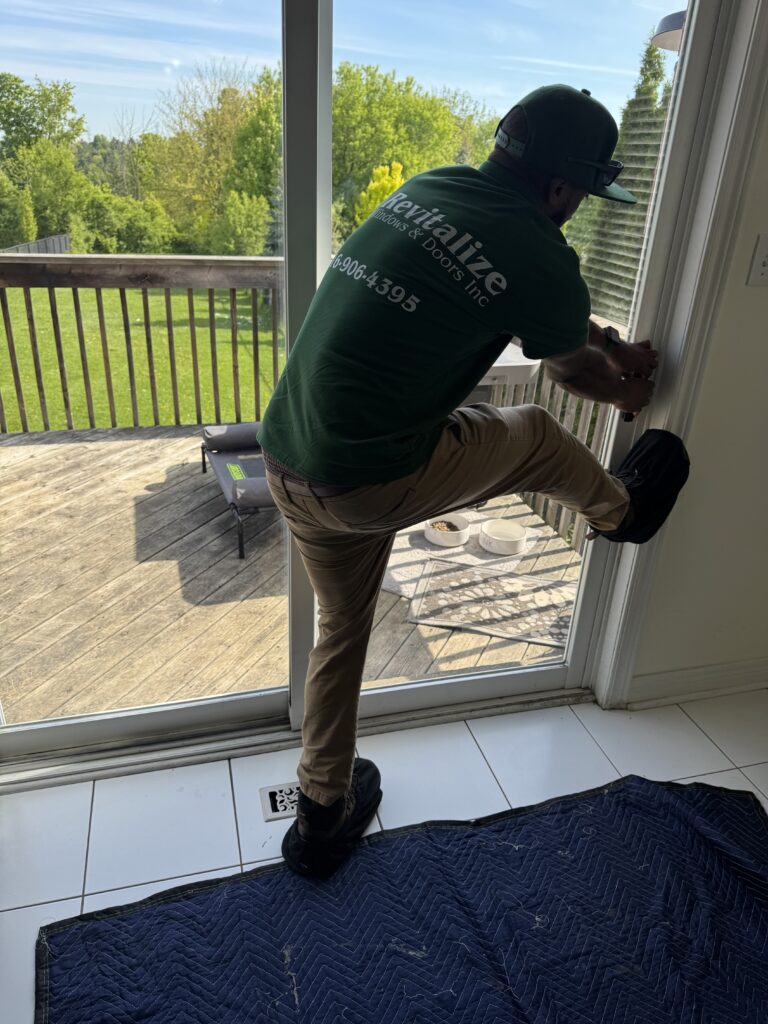
1. Worn or Damaged Rollers
This is the single most common cause of a patio door that won’t close smoothly or reach its fully latched position. Sliding patio doors ride on a set of small rollers mounted at the bottom of the panel, and those rollers are what allow the door to glide along its track.
Years of daily use wear those rollers down. They flatten, collect debris, or seize up, and once that happens, the door stops sliding evenly. It may drag, catch partway through its travel, or simply fail to reach the point where the latch can engage.
Quick test: Lift the door handle slightly while sliding it closed. If it suddenly moves more freely, the rollers have likely dropped or worn out and need adjustment or replacement.
2. A Dirty or Damaged Track
The track your door rolls along collects leaves, dirt, and small debris over time, particularly on doors that lead out to a backyard or deck. Even a modest buildup can be enough to throw off the door’s glide and prevent it from closing all the way.
Tracks can also become bent or dented, whether from an impact, a persistent pet, or simple wear over the years.
Quick test: With the door open, run your fingers along the track and check for debris, then look closely for any visible bends or dents in the metal itself.
3. The Frame Has Shifted Out of Alignment
Patio doors are heavy, and the frames holding them can shift slightly over time due to the house settling, seasonal ground movement, or years of consistent weight bearing down in the same spots.
Once the frame shifts, even by a small margin, the door and its latch no longer line up the way they did originally. This often shows up as a door that closes but doesn’t quite reach the latch, or one that closes tightly on one side while leaving a visible gap on the other.
Quick test: Close the door and check the gap between the door and frame on both sides. If it’s noticeably wider at the top than the bottom, or the reverse, the frame has likely shifted out of square.
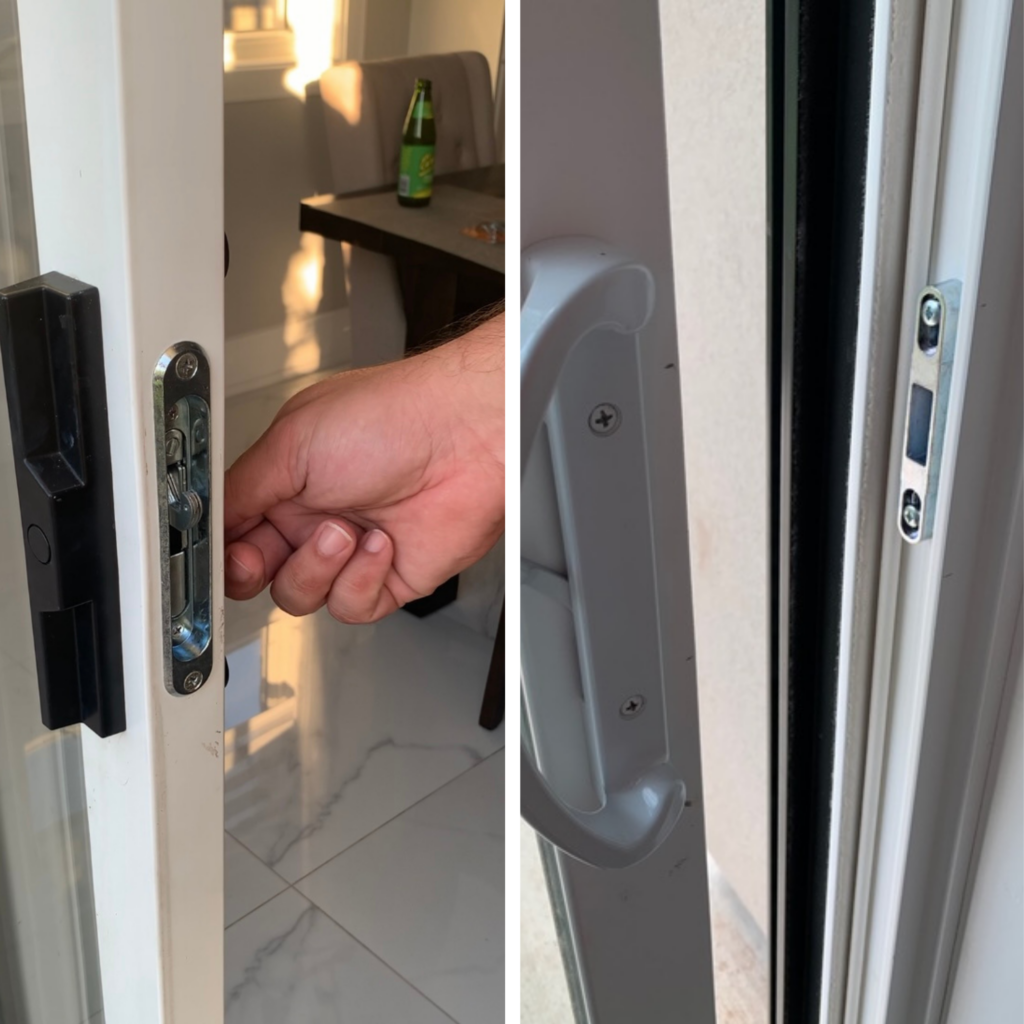
4. A Misaligned Latch or Strike Plate
The latch and the strike plate on the frame need to line up precisely for the door to lock securely. If the door has shifted even slightly, or the hardware itself has loosened, the latch can miss its mark entirely.
This typically shows up as a door that appears closed but doesn’t actually lock, and it can pop back open on its own, especially on a windy day.
How to fix it: Often, this just needs a small adjustment. The strike plate can be repositioned to realign with the latch, or the latch mechanism itself can be tightened. If the hardware is too worn to adjust properly, replacement is usually quick and inexpensive.
5. Something Small Is Stuck in the Track or Latch
Sometimes the answer is refreshingly simple. A small object has worked its way into the track or latch assembly and is quietly blocking things from operating smoothly. This is especially common in homes with pets or kids frequently going in and out to the backyard.
Quick test: A visual check and light cleaning of the track and latch area often solves this on the spot, and it’s worth ruling out before assuming something more involved is going on.
6. Worn or Compressed Weatherstripping
The weatherstripping around a patio door isn’t just there to block drafts. It also creates just enough resistance to help the door sit securely in its closed position. As weatherstripping compresses or wears thin, which happens gradually with years of exposure to our seasonal temperature swings, the door can start to feel looser in the frame and may not latch as reliably as it once did.
Quick test: Run your hand along the weatherstripping with the door closed. If it feels flat, brittle, or you can see daylight through gaps, it’s likely part of the problem and due for replacement.
7. A Warped Door Panel
Less common, but worth ruling out, especially on older wood-framed patio doors or ones that have seen significant moisture exposure. Even slight warping in the panel itself can prevent it from making proper contact with the frame and latch, no matter how well the rest of the hardware is functioning.
Quick test: With the door open, sight down the length of the panel the way you’d check a piece of lumber for straightness. Any visible bowing points to warping rather than a hardware problem.
When to Call in a Professional
Most patio door issues fall into one of the categories above and can be resolved with cleaning, adjustment, or targeted repairs. A few signs, though, suggest it’s time to bring in someone who does this regularly rather than continuing to troubleshoot on your own:
- The frame shows visible rot, cracking, or structural damage
- More than one issue seems to be happening at once, like worn rollers combined with a shifted frame
- Adjustments keep slipping within days of being made
- The door panel itself shows warping that adjustment alone won’t fix
If any of this sounds familiar, a proper assessment tends to save time and money compared to replacing components one at a time and hoping something finally sticks. This is exactly the kind of diagnostic work our team at Revitalize Windows & Doors handles on a regular basis, identifying the actual root cause before recommending any repair.
Why We See This So Often in the GTA
Sliding patio doors across the GTA deal with a genuinely wide range of seasonal stress throughout the year. Frames and hardware expand and contract through everything from deep winter cold to summer heat, and that repeated cycling is a big part of why roller wear, track problems, and alignment issues tend to show up more consistently here than they would in a milder climate.
This isn’t a reflection of poor installation. It’s simply part of maintaining a well-used patio door somewhere with real seasonal extremes. If your patio door issue is showing up alongside other window or door concerns around your property, our window and door repair services across the GTA can take a broader look and help prioritize what needs attention first.
Key Terms Worth Knowing
Rollers: The small wheels at the bottom of a sliding door panel that let it glide along the track.
Track: The metal channel the door slides along, guiding its movement across the opening.
Strike Plate: The metal plate on the frame that the door’s latch engages with to keep it securely closed.
Weatherstripping: The flexible material around a door’s edges that blocks drafts and helps it sit snugly against the frame.
Out of Square: A term for a door or frame that has shifted so its corners are no longer true right angles, throwing off the alignment between door and frame.
Why Revitalize Windows & Doors Gets Called for This
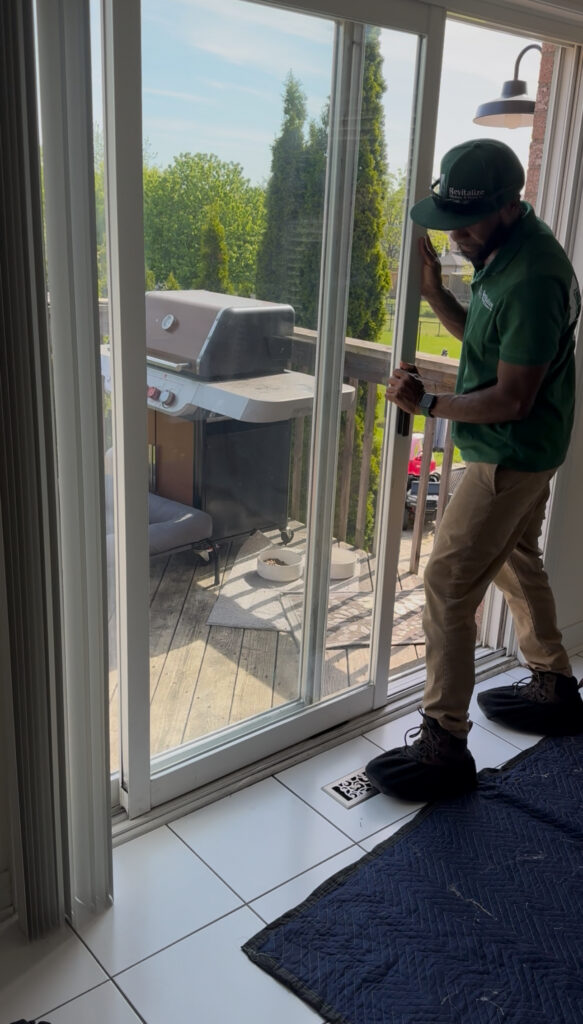
We’ve repaired sliding patio doors across homes throughout Toronto, everything from a quick roller adjustment to more involved cases where the entire frame had shifted out of alignment. We always start by pinpointing the actual root cause before recommending any repair, rather than swapping out parts one at a time and hoping for the best.
How We Can Help You Today
- Roller replacement and adjustment for sliding patio doors
- Track cleaning, repair, and realignment
- Latch and strike plate adjustment or replacement
- Weatherstripping replacement for a proper seal
- Full patio door assessment for frame alignment and structural concerns
Frequently Asked Questions
Why does my door slide fine but won’t latch? This is most often caused by a misaligned strike plate or latch mechanism, sometimes due to the frame shifting slightly, which keeps the latch from properly catching.
Can I fix worn rollers on my own? In some cases, rollers can be adjusted using a small screw near the base of the door panel, but full replacement usually requires removing the door from the track, which is often safer and easier to have handled professionally.
Is it normal for patio doors to need periodic adjustment? Yes, especially in a climate with the seasonal swings we see across Toronto and the GTA. Occasional adjustment is a normal part of long-term patio door maintenance.
How can I tell if it’s the rollers or the track causing the problem? If the door drags or catches at specific points despite the rollers seeming to move freely, the track itself may be bent or damaged. If the door feels heavy or doesn’t glide smoothly at all, worn rollers are the more likely culprit.
Does a door that won’t latch properly create a security risk? Yes. A door that looks closed but isn’t actually latched can be a real security gap, so it’s worth addressing sooner rather than later.
Ready to Get Your Patio Door Working Properly Again?
If your patio door is sticking, dragging, or refusing to latch, we’re happy to take a look and pinpoint exactly what’s going on. Contact us directly to request your free quote, and we’ll get your door closing and locking the way it should.