What Are the Different Types of Commercial Door Sweeps?
If you manage a commercial property in Toronto, there’s a good chance you’ve walked past your entrance on a windy winter day and felt a draft creeping in right at floor level, even with the door fully closed. That gap is almost always coming from a worn, missing, or simply wrong type of door sweep. It’s one of the smallest components on a commercial door, and also one of the most commonly overlooked when it comes to energy efficiency, pest control, and general building maintenance.
A door sweep might seem like a minor detail, but choosing the right one for your specific door and application actually makes a real difference. In this guide, we’ll walk through the different types of commercial door sweeps, what each one is designed for, and how to figure out which one is right for your building. If your current sweep is worn out or was never properly matched to your door, our commercial door hardware services cover sweep replacement along with the rest of your door’s hardware.
1. What a Door Sweep Actually Does
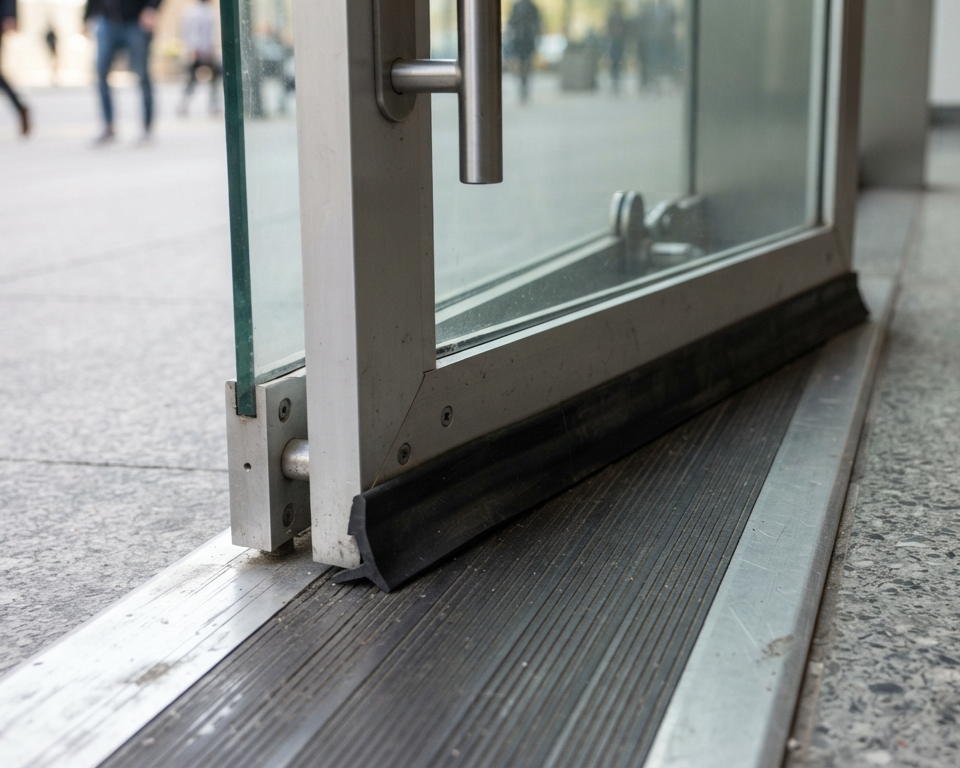
A door sweep is a strip of material, usually rubber, vinyl, brush bristle, or a combination, attached to the bottom of a door to seal the gap between the door and the threshold or floor. Its main job is blocking drafts, moisture, dust, and pests from entering through that gap, which exists on virtually every commercial door to allow for clearance and swing.
Without an effective sweep, that small gap becomes a consistent source of air infiltration. On a commercial building with high daily traffic, that draft adds up to a measurable impact on heating and cooling costs over the course of a year, particularly here in Toronto where we deal with a wide seasonal temperature swing.
2. Standard Rubber Door Sweeps
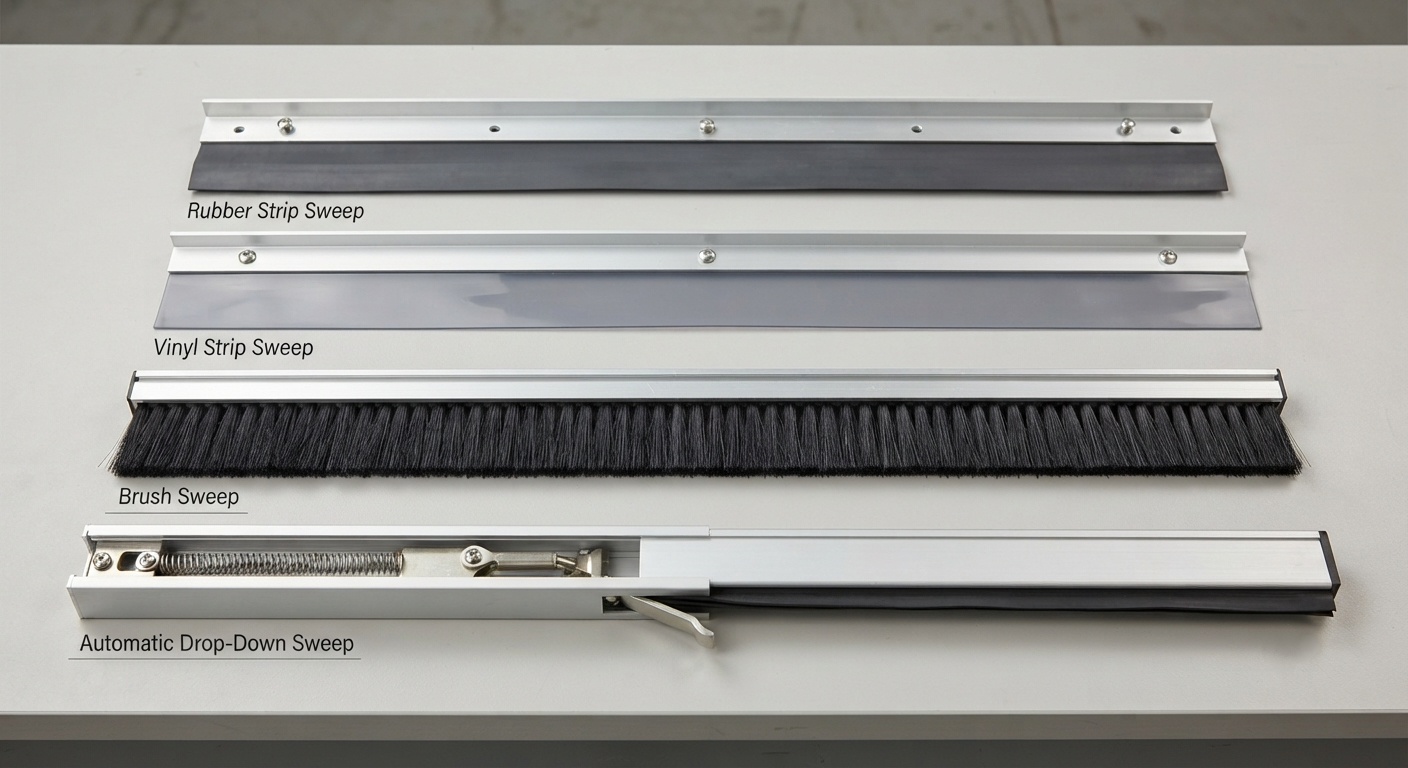
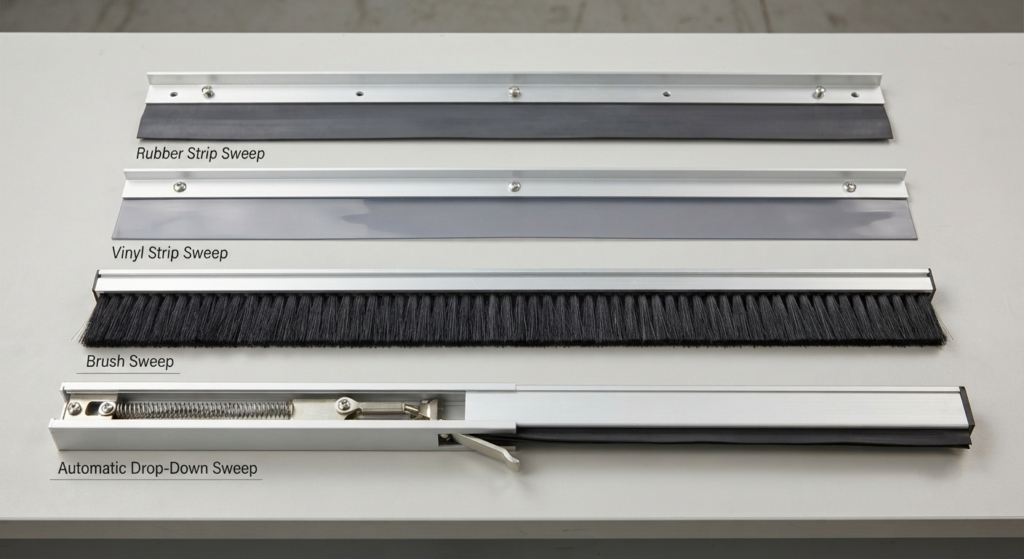
Rubber door sweeps are the most common type used on standard commercial entrances. They consist of a flexible rubber strip mounted to a metal or aluminum retainer that attaches to the bottom of the door.
Best for: General-purpose commercial entrances with moderate traffic, where a reliable seal against drafts and light moisture is the main priority.
Pros: Affordable, widely available, and effective at blocking drafts and dust under normal conditions.
Limitations: Rubber sweeps compress and wear down faster on high-traffic doors, and they can become stiff or brittle in extreme cold, which is worth factoring in for exterior doors exposed to Toronto winters.
3. Vinyl Door Sweeps
Vinyl sweeps function similarly to rubber sweeps but tend to hold up slightly better in fluctuating temperatures, staying more flexible in cold weather compared to standard rubber.
Best for: Exterior commercial doors that see significant temperature swings throughout the year, which describes most entrances across Toronto and the GTA.
Pros: Better cold-weather flexibility than rubber, generally durable, and cost-effective.
Limitations: Like rubber, vinyl sweeps will eventually compress and wear with heavy daily use and need periodic replacement to maintain an effective seal.
4. Brush Door Sweeps
Rather than a solid strip of rubber or vinyl, brush sweeps use dense bristles, typically nylon, to create a seal across the bottom of the door.
Best for: Uneven thresholds or floors, garage-style commercial doors, and applications where some airflow or drainage is acceptable but pest and debris control is the priority.
Pros: Brush sweeps handle uneven or slightly out-of-level thresholds better than solid strip sweeps, since the bristles flex individually rather than needing full, even contact across the width of the door.
Limitations: They generally provide a less airtight seal against drafts compared to rubber or vinyl, since the bristle design isn’t intended to fully block airflow the way a solid strip does.
5. Automatic (Drop-Down) Door Sweeps
Automatic door sweeps, sometimes called drop-down sweeps, are a more specialized hardware option. Rather than remaining in constant contact with the floor, the sweep mechanism stays retracted while the door is open and automatically drops down to seal the gap the moment the door closes.
Best for: Fire-rated doors, sound-sensitive applications, and high-traffic commercial entrances where reducing wear on a constantly-dragging sweep is a priority.
Pros: Since the sweep only makes contact with the floor when the door is closed, it experiences significantly less wear than a standard sweep that drags across the threshold with every open and close cycle. This also makes automatic sweeps a common requirement for fire-rated doors, where an effective seal is critical for smoke and fire containment.
Limitations: Higher upfront cost and more complex installation compared to standard strip sweeps, since the mechanism itself needs to be properly calibrated to activate consistently.
6. Weighted Door Sweeps
Weighted sweeps use a similar drop-down concept to automatic sweeps but rely on gravity and a weighted internal mechanism rather than a spring-loaded or cam-activated system.
Best for: Applications similar to automatic sweeps, where minimizing threshold wear and improving the seal on a fire-rated or sound-sensitive door is the goal, often at a somewhat lower cost than a fully mechanical automatic sweep.
Pros: Reduced wear compared to standard drag sweeps, with a simpler mechanism than spring-activated automatic versions.
Limitations: Can be less consistent in operation compared to precision automatic sweeps, and may require more frequent adjustment to maintain reliable performance.
7. Threshold-Integrated Sweeps
On some commercial doors, particularly higher-end storefront and entrance systems, the sweep isn’t a separate attached strip at all. Instead, it’s built directly into a specialized threshold and door bottom assembly, designed as a matched system for maximum sealing performance.
Best for: New commercial door installations or full storefront system upgrades where sealing performance and long-term durability are top priorities.
Pros: Typically the most effective and longest-lasting sealing option, since the components are engineered specifically to work together.
Limitations: Not usually a retrofit option for existing doors; this type of system is generally selected during new installation rather than added afterward.
Which Type of Sweep Makes the Most Sense for Your Building?
A few practical questions can help point you toward the right option:
- Is your threshold perfectly level, or somewhat uneven? Uneven thresholds often do better with brush sweeps, which flex to accommodate irregularities.
- Is this a fire-rated door? Automatic or weighted drop-down sweeps are frequently required to meet fire code sealing standards.
- How much daily traffic does the door see? High-traffic doors benefit from automatic sweeps, which experience far less wear than sweeps that drag with every cycle.
- Is this an exterior door exposed to Toronto’s full seasonal temperature range? Vinyl or automatic sweeps generally hold up better than standard rubber in extreme cold.
- Is this a new installation or a retrofit on an existing door? Threshold-integrated systems typically only make sense for new installs, while rubber, vinyl, brush, and automatic sweeps can all be retrofitted onto most existing commercial doors.
If you’re not sure which category your building’s doors fall into, our 198754 window and door repair services across the GTA include hardware assessments that can help match the right sweep to your specific doors and traffic patterns.
Signs Your Current Door Sweep Needs Replacing
- Visible daylight or a gap underneath the closed door
- A noticeable draft at floor level near the entrance
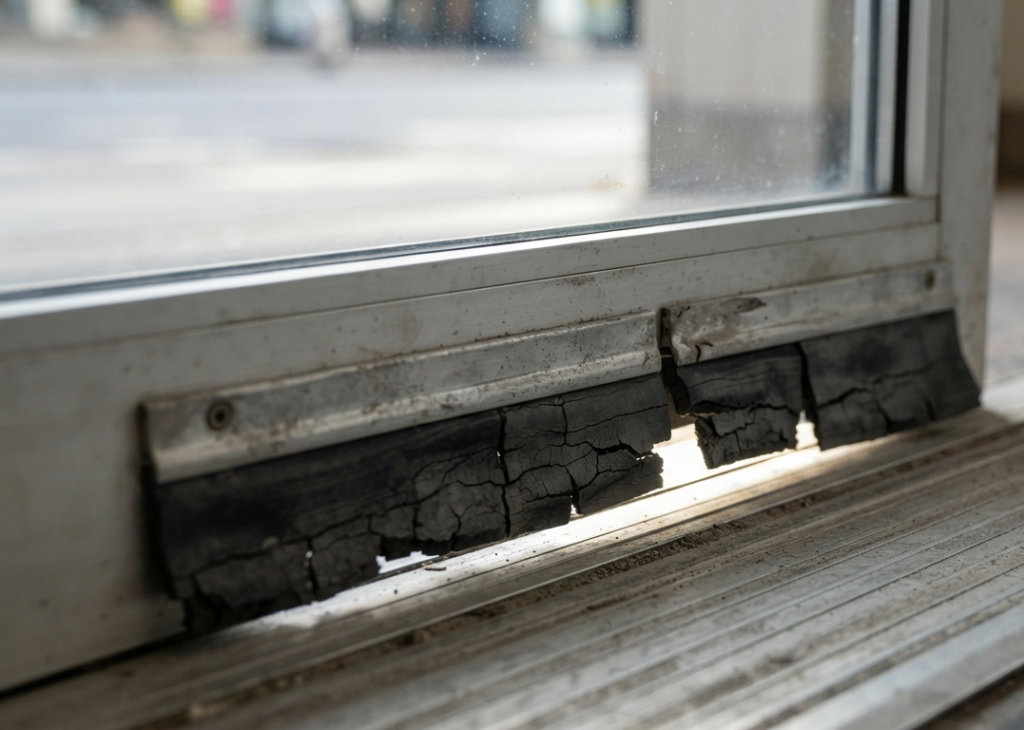
- Cracked, torn, or compressed rubber or vinyl that no longer makes full contact with the floor
- Bristles on a brush sweep that are frayed, matted, or missing sections
- An automatic or weighted sweep that no longer drops or retracts consistently
- Visible pest entry points or debris accumulation at the base of the door
Key Terms Worth Knowing
Threshold: The strip along the bottom of a doorway, usually metal or a composite material, that the door closes against and the sweep seals to.
Drop-Down Sweep: A general term for automatic or weighted sweeps that retract while the door is open and lower to seal the gap when the door closes.
Cam Mechanism: The internal component in many automatic sweeps that activates the drop-down function based on the door’s closing motion.
Fire Rating: A classification indicating how long a door assembly, including its seals and hardware, is designed to resist the spread of fire and smoke. Certain fire ratings require specific sweep types to remain compliant.
Compression Set: The gradual, permanent flattening that rubber and vinyl sweeps experience over time from repeated contact, eventually reducing their ability to form an effective seal.
Why Door Sweeps Matter More for Commercial Properties in Toronto
Commercial doors typically see far more daily open-and-close cycles than a residential door, which means sweep wear happens faster and the impact of a failed seal is magnified across an entire heating or cooling season. Combined with the wide seasonal temperature swings we experience here, from well below freezing in winter to well above 30°C in summer, an underperforming or mismatched door sweep can meaningfully affect both energy costs and interior comfort near your entrance.
For fire-rated commercial doors specifically, having the correct sweep type isn’t just about efficiency. It’s often a code compliance issue, which makes getting this detail right more important than it might initially seem.
Why Choose Revitalize Windows & Doors Inc
We work with commercial door hardware across retail, office, and institutional properties throughout Toronto, and door sweeps are one of the most common small-but-impactful upgrades we get called out for. We take the time to match the right sweep type to your specific door, threshold, and traffic pattern, rather than defaulting to whatever standard option is easiest to install.
How We Can Help You Today
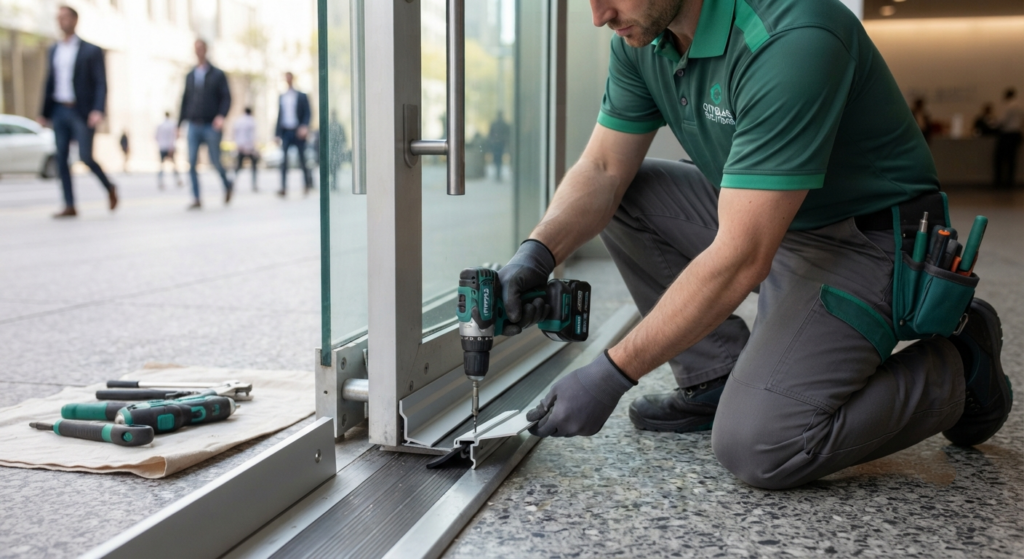
- Door sweep assessment and replacement for commercial entrances
- Automatic and weighted drop-down sweep installation for fire-rated doors
- Threshold and door bottom hardware upgrades for new installations
- Full commercial door hardware repair, including hinges, closers, and locks
- Energy efficiency assessments for high-traffic commercial entrances
Frequently Asked Questions
How often do commercial door sweeps need to be replaced? This depends on traffic volume and sweep type, but standard rubber or vinyl sweeps on high-traffic commercial doors often need replacement every 1 to 3 years, while automatic sweeps typically last significantly longer due to reduced wear.
Are automatic door sweeps required by code? For many fire-rated commercial doors, yes, an automatic or weighted drop-down sweep is often required to meet fire and smoke containment standards. Requirements can vary, so it’s worth confirming what applies to your specific door and building classification.
Can a brush sweep fully block drafts like a rubber sweep can? Not entirely. Brush sweeps are better suited to uneven thresholds and pest control, but they generally allow slightly more airflow through compared to a solid rubber or vinyl strip.
Do door sweeps affect energy bills? Yes, especially on high-traffic commercial entrances. A worn or missing sweep creates a consistent draft that can noticeably affect heating and cooling costs over a full season.
Can I replace a door sweep myself, or does it need a professional? Basic rubber or vinyl sweep replacement can be a manageable DIY task on some doors, but automatic and weighted sweeps, along with fire-rated door applications, are best handled professionally to ensure proper calibration and code compliance.
Ready to Upgrade Your Commercial Door Sweep?
If your entrance is drafty, letting in pests, or simply overdue for a hardware refresh, we’re happy to assess your doors and recommend the right sweep for your specific situation. Contact us directly to request your free quote, and we’ll help seal up your entrance properly.