What’s the Best Mesh for Sliding Screen Doors?
Standing in the screen aisle at a hardware store, staring at a handful of rolls that all look more or less the same, it’s easy to assume mesh is mesh. Grab whatever’s cheapest, patch the hole, move on with your day. But if you’ve ever replaced a screen only to have it torn again within a season, or noticed you can barely see through it anymore, you already know that not all mesh performs the same way.
At Revitalize Windows & Doors, this is a question we get constantly, especially from homeowners across Toronto dealing with pets, young kids, or a screen that’s been through one too many summers. The right mesh depends largely on what you’re actually trying to solve for, whether that’s durability, visibility, or keeping smaller pests out. If you’re due for a screen replacement, our screen door services cover all of the mesh types we’ll walk through below.
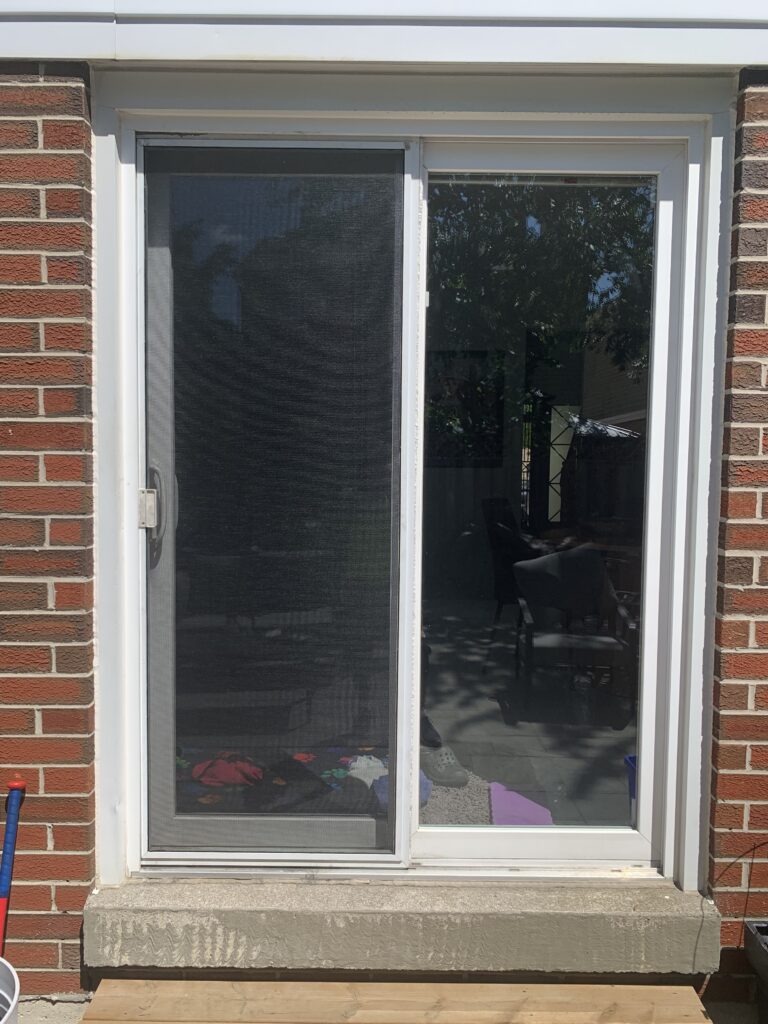
1. Fiberglass Mesh: The Everyday Standard
Fiberglass mesh is what most sliding screen doors come with from the factory, and for good reason. It’s affordable, easy to work with, and does a solid job of blocking common insects while maintaining decent visibility and airflow.
Best for: General-purpose use on doors with light to moderate traffic, and households without pets that scratch or push against the screen regularly.
Pros: Budget-friendly, simple to install or replace, resists corrosion, and won’t dent or crease the way metal mesh can.
Limitations: It’s the least durable option on this list. Fiberglass mesh tears relatively easily under pressure, whether that’s a determined cat, an overly enthusiastic dog, or just a stroller catching the edge on the way through.
2. Aluminum Mesh: A Step Up in Rigidity
Aluminum mesh trades some of fiberglass’s flexibility for added strength and structure. It holds its shape well and resists sagging over time, which is part of why it was the standard choice for decades before fiberglass became more widely used.
Best for: Homes that want a slightly more rigid screen with a traditional look, and areas with moderate exposure to wind or general wear.
Pros: More resistant to sagging and general wear than fiberglass, and it tends to hold its shape well over the years.
Limitations: It can dent or crease if struck, and once bent, aluminum mesh doesn’t bounce back the way fiberglass does. It’s also more prone to corrosion over time if not treated, particularly in humid conditions.
3. Pet-Resistant Mesh: Built for Claws and Chewing
Pet-resistant mesh, sometimes marketed under specific brand names, is made from a thicker, more heavily woven polyester or vinyl-coated material specifically engineered to resist scratching, clawing, and light chewing.
Best for: Households with dogs or cats that regularly interact with the screen door, whether that’s pushing through it, scratching to be let in, or simply lounging against it.
Pros: Significantly more tear-resistant than standard fiberglass or aluminum, often rated to withstand several times the force before puncturing or tearing.
Limitations: It’s noticeably thicker than standard mesh, which slightly reduces visibility and airflow compared to finer mesh options, and it typically costs more upfront.
4. Solar or Sun-Blocking Mesh: Comfort Over Visibility
Solar mesh is a denser weave designed primarily to block a significant portion of solar heat and glare while still allowing airflow. It’s less about insect protection and more about comfort, particularly on south or west-facing doors that get heavy afternoon sun.
Best for: Homes with screen doors on sun-exposed walls, especially where heat gain through the doorway is a noticeable comfort issue during summer months.
Pros: Reduces glare and heat transfer noticeably compared to standard mesh, which can make a real difference in comfort near the doorway during peak summer heat.
Limitations: The tighter weave reduces visibility through the screen more than standard fiberglass or aluminum, and airflow is somewhat reduced as well, though usually not dramatically.
5. No-See-Um Mesh: Maximum Pest Protection
No-see-um mesh uses an extremely fine weave designed to block even the smallest biting insects, including tiny gnats and midges that can slip through standard fiberglass or aluminum mesh without any trouble.
Best for: Properties near wooded areas, standing water, or anywhere small biting insects are a persistent seasonal nuisance.
Pros: Blocks pests that standard mesh simply can’t stop, offering the most comprehensive insect protection of any common mesh type.
Limitations: The fine weave restricts airflow more noticeably than other options, which is worth factoring in if good ventilation through the door is a priority for you.
Comparing Your Options at a Glance
| Mesh Type | Durability | Visibility | Airflow | Best For |
|---|---|---|---|---|
| Fiberglass | Low–Moderate | High | High | General everyday use |
| Aluminum | Moderate | High | High | Traditional look, moderate wear |
| Pet-Resistant | High | Moderate | Moderate | Homes with active pets |
| Solar Mesh | Moderate | Low–Moderate | Moderate | Sun-exposed doors, heat reduction |
| No-See-Um | Moderate | Moderate | Low–Moderate | Small biting insect protection |
There’s no single “best” mesh across the board. It genuinely comes down to what’s actually causing your current screen to fail, or what problem you’re hoping to solve with a new one.
How to Decide Which Mesh Is Right for Your Home
A few honest questions can help point you toward the right choice:
- Do you have a dog or cat that regularly interacts with the screen? If so, pet-resistant mesh will save you from repeat replacements.
- Does your screen door face direct afternoon sun? Solar mesh can noticeably improve comfort near that entryway.
- Are small biting insects a recurring issue in your area? No-see-um mesh is the only option on this list built specifically for that problem.
- Is budget your main concern, and none of the above apply? Standard fiberglass mesh remains a perfectly reasonable, cost-effective choice for most households.
If you’re not sure which category fits your situation, our window and door repair services across the GTA include screen assessments where we can help match the right mesh to your actual day-to-day use.
A Common Myth: “Thicker Mesh Is Always Better”
It’s a natural assumption, but it’s not quite accurate. Thicker, more heavily woven mesh options like pet-resistant or no-see-um mesh genuinely do offer more durability or finer pest protection, but that comes at the cost of visibility and airflow.
For a household without pets and without a specific pest problem, upgrading to the thickest available mesh isn’t really solving anything, and you’d just be trading a clearer view and better airflow for durability you don’t actually need. This is exactly the kind of trade-off the Revitalize Windows & Doors team walks through with homeowners before recommending any specific mesh type. The right mesh is the one that matches your specific situation, not necessarily the toughest one available.
Key Terms Worth Knowing
Weave Density: How tightly the mesh fibers are woven together, which directly affects visibility, airflow, and how small a pest the mesh can block.
Tensile Strength: A measure of how much force a material can withstand before tearing, commonly used to compare durability between mesh types.
Vinyl-Coated Polyester: The material most pet-resistant mesh is made from, combining flexibility with added puncture and tear resistance.
Solar Heat Gain: The amount of heat that passes through a material, in this case a screen mesh, from direct sunlight. Solar mesh is specifically designed to reduce this.
Frame Spline: The rubber cord used to secure mesh into the door’s frame channel, which also plays a role in how tightly and evenly the mesh sits once installed.
Does Installation Quality Matter as Much as Mesh Choice?
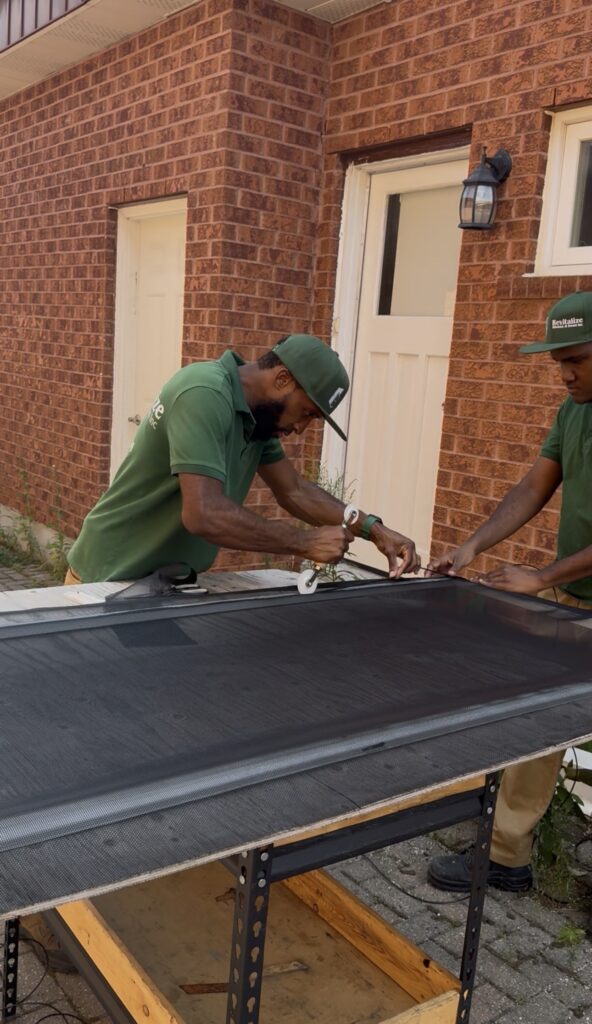
It genuinely does, and it’s worth mentioning here. Even the most durable mesh will underperform if it’s installed loosely or without proper tension across the frame. A screen that sags or has slack in it is far more prone to catching, tearing, or pulling away from the frame spline, regardless of how strong the material itself is rated to be.
This is one of the reasons a professionally installed screen, with proper tension and a correctly seated spline, tends to outlast a DIY replacement using the exact same mesh material. The Revitalize Windows & Doors team pays close attention to this step specifically, since a well-chosen mesh installed poorly won’t perform the way it’s supposed to.
Why Choose Revitalize Windows & Doors
We’ve replaced and upgraded sliding screen doors across homes throughout Toronto, and mesh selection is one of the more overlooked details in the process. We walk homeowners through the trade-offs between durability, visibility, and airflow so the final choice actually fits how the door gets used day to day, rather than defaulting to whatever’s fastest to install.
How We Can Help You Today
- Custom-fitted mesh replacement for sliding screen doors
- Pet-resistant mesh upgrades for households with dogs and cats
- Solar mesh installation for sun-exposed entryways
- No-see-um mesh for properties dealing with small biting insects
- Full screen door assessment and frame repair alongside mesh replacement
Frequently Asked Questions
How long does standard fiberglass mesh typically last? With normal use and no significant pet interaction, fiberglass mesh commonly lasts several years before it needs replacing due to general wear, sun exposure, or minor tears.
Is pet-resistant mesh worth the extra cost? For households with an active dog or cat that regularly interacts with the screen, yes. The added durability usually pays for itself by avoiding repeat replacements.
Can I combine solar mesh with pet-resistant features? Some specialty mesh products do combine heat-blocking properties with added durability, though options can vary. It’s worth discussing your specific priorities so the right product can be sourced for your door.
Does a finer mesh weave always mean less airflow? Generally, yes. Finer weaves like no-see-um mesh block smaller particles and insects but do reduce airflow somewhat compared to a standard fiberglass or aluminum weave.
Can I replace just the mesh, or does the whole screen door need to be replaced? In most cases, mesh can be replaced within the existing screen door frame, which is a far less expensive option than replacing the entire door.
Ready to Upgrade Your Screen Door Mesh?
Whether your current screen is torn, letting in bugs, or just past its best years, we’re happy to help you figure out which mesh actually fits your household. Contact us directly to request your free quote, and we’ll get your screen door working the way it should.