How Do You Know When To Repair or Replace Window Screens in Toronto & the GTA
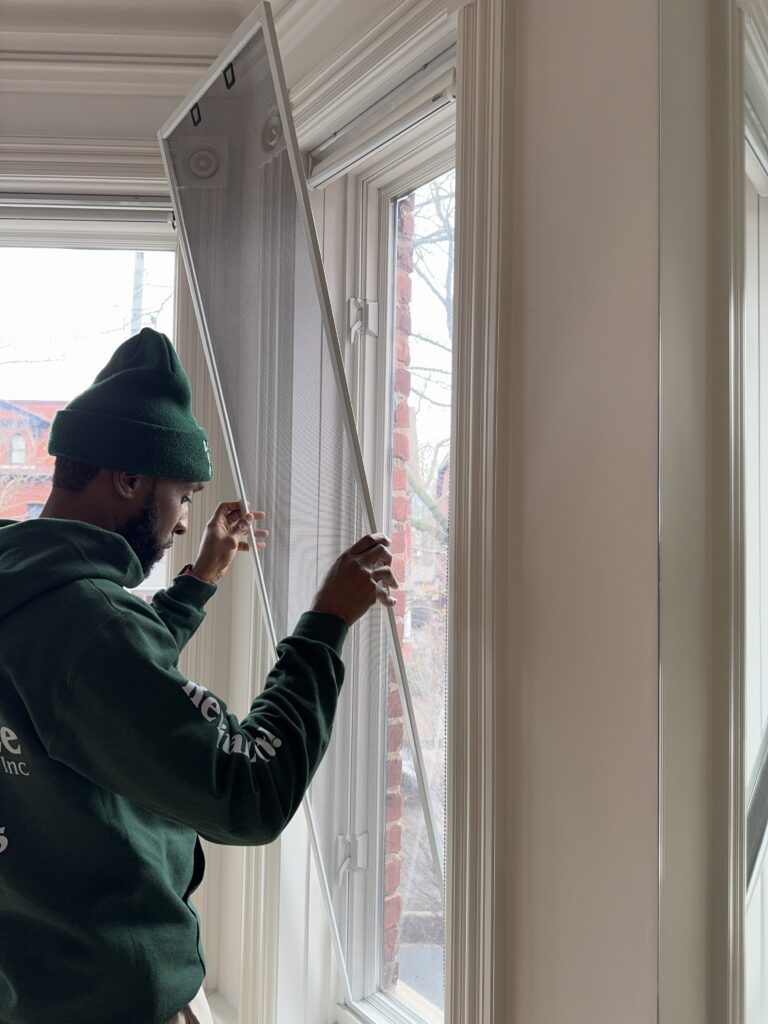
If you’re standing at your window right now looking at a sagging, torn, or bent screen and wondering whether it’s worth fixing or if you should just replace the whole thing, here’s the short answer: if the damage is limited to the mesh itself — a small tear, a hole, or general wear — repair is almost always the smarter, cheaper choice. If the frame is bent, warped, cracked, or no longer fits snugly in the track, replacement is the way to go. The mesh is cheap. The frame is where the real cost lives.
That’s the quick version. But like most things with windows and doors, the real answer depends on a handful of details specific to your situation — and specific to living in Toronto and the GTA, where our screens take a beating from humidity swings, freeze-thaw cycles, and more than a few determined raccoons. Let’s walk through exactly how we’d assess your screens if we were standing in front of them with you.
Why This Decision Actually Matters
Window screens seem like a minor part of the house. They’re not structural, they don’t affect your heating bills the way a window seal does, and most people only think about them a few months a year. But a damaged screen does more than let in the odd mosquito. It affects airflow, it can let in dust and pollen that aggravate allergies, and if the frame itself is compromised, it can actually start affecting how well your window opens, closes, and locks. We’ve seen homeowners in North York and Scarborough try to force a warped screen back into a track, only to end up bending the window frame’s channel in the process. That turns a $40 fix into a much bigger one.
So getting this decision right isn’t just about aesthetics. It’s about protecting the window itself.
Signs You Just Need a Repair
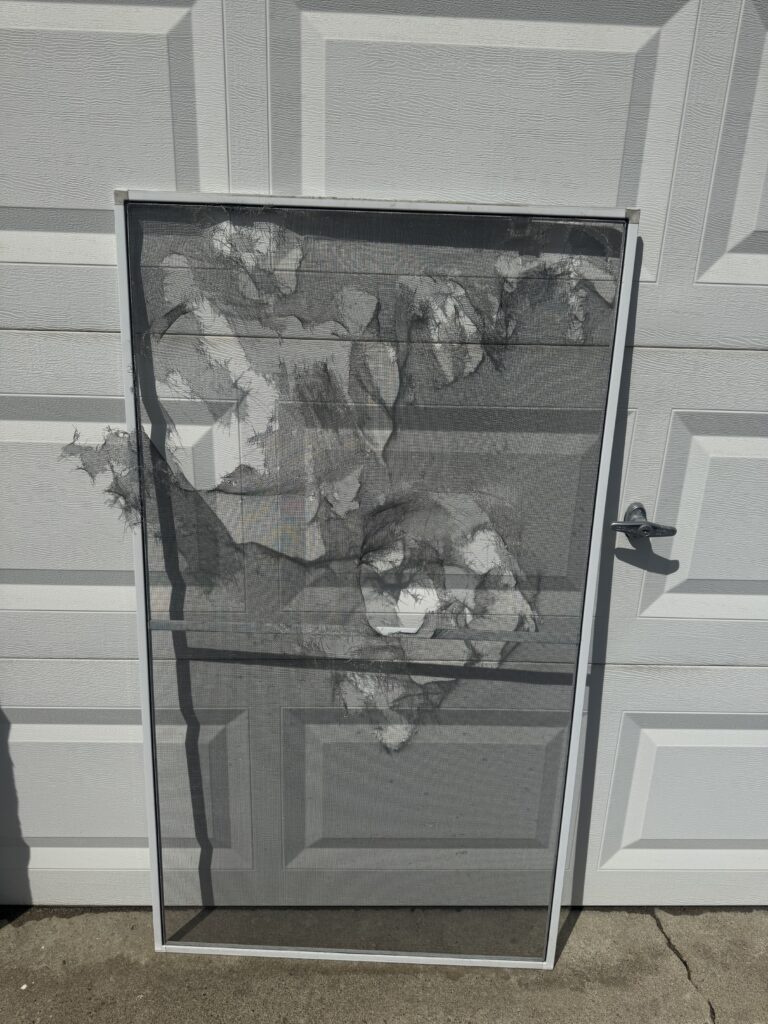
Here’s what we look for when we tell a homeowner “you don’t need to replace this, we can just fix it.”
Small tears, holes, or punctures in the mesh. This is the single most common screen issue we see, especially after a Toronto winter when screens have been stored (or left up) through freezing temperatures and then get poked at by squirrels or snagged during spring cleaning. If the mesh has a tear under a few inches, or a hole from a branch or a pet’s claw, this is a straightforward re-screening job. The frame is fine — it’s just the material stretched across it that’s failed.
Loose or popped spline. The spline is the thin rubber cord that holds the mesh into the groove around the frame’s edge. Over time, especially with the temperature swings we get here — hot, humid summers followed by dry, cold winters — that spline can shrink, crack, or pop out of its groove. This causes the mesh to sag or bulge. Good news: this is a repair, not a replacement. We pull the old spline, re-tension the mesh, and press in new spline. The frame itself is untouched.
General mesh wear or discoloration. If your screens are a bit yellowed, slightly stretched out, or just look tired but the frame is straight and fits well in the track, this is a cosmetic and functional repair. New mesh, same frame, and it looks (and functions) like new.
One or two bent corners with an otherwise straight frame. Minor corner damage can sometimes be repaired with corner key replacement rather than a full new frame, provided the rest of the frame is straight and undamaged.
Signs You Need a Full Replacement
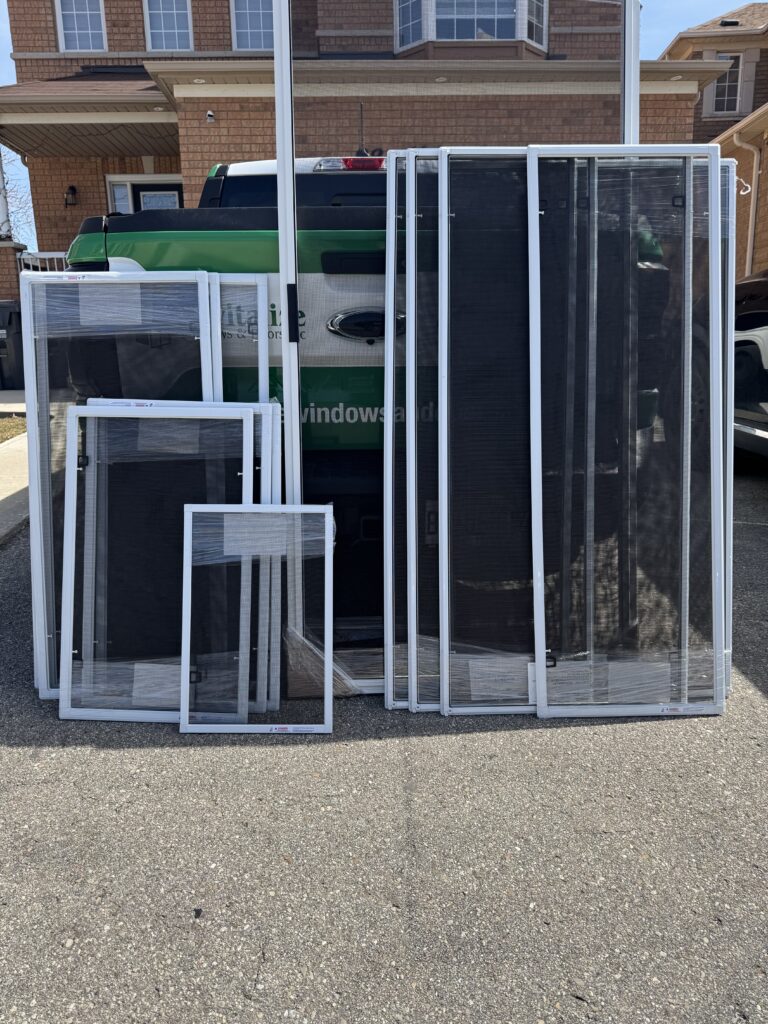
Now here’s where we tell homeowners honestly that repair isn’t going to cut it.
A bent, warped, or twisted frame. This is the big one. Aluminum and fiberglass screen frames can bend from being leaned on, dropped, sat on by a pet, or — something we see a lot in the GTA — from being forced into a track that’s slightly out of square after a house has settled. Once the frame itself is bent, no amount of new mesh will fix the underlying problem. The screen won’t sit flush, it won’t seal against drafts and bugs properly, and it’ll likely keep popping out of the track. At that point, you’re paying for labour to re-screen a frame that’s still going to function poorly. It’s more cost-effective, and it looks better, to replace the frame outright.
Cracks in the frame material, especially at the corners. Corner joints are the weakest point on most screen frames. If you see a visible crack or separation at a corner, especially on an older aluminum frame that’s become brittle, that’s a structural failure, not a cosmetic one.
A frame that no longer fits the track. Homes across Toronto and the GTA — whether it’s a century home in Leslieville or a newer build in Vaughan — go through seasonal expansion and contraction. If your window frame has shifted even slightly, or if the screen frame itself has warped from heat exposure on a south-facing window, you’ll notice the screen doesn’t sit flush anymore or falls out easily. A repair won’t correct a fit issue. That requires a new frame sized correctly for the current opening.
Multiple issues at once. If a screen has torn mesh, a loose spline, and a slightly bent corner all at the same time, you’re better off replacing it. At that point you’re paying labour multiple times over for a screen that’s clearly past its functional life, when a full replacement solves everything at once and often costs about the same.
Custom or discontinued sizes where parts aren’t available. Some older homes in the GTA have window sizes that don’t match modern standard screen dimensions. If we can’t source a compatible frame, spline groove, or mesh type for a repair, replacement with a custom-built screen is the only real option.
What About Cost?
We’ll be straightforward here because this is usually the first question anyone actually cares about.
A simple re-screening — new mesh and spline on an existing, straight frame — is one of the most affordable repairs in the window world. It’s quick labour and inexpensive material. A full screen replacement, where we’re building or sourcing a new frame to fit your window opening, naturally costs more because of the frame material and the precision fitting involved.
The mistake we see homeowners make is trying to save money by repairing a screen with a damaged frame, only to have it fail again within a season or two because the underlying problem was never fixed. If the frame is compromised, spending money on new mesh is really just delaying the inevitable. We’d rather tell you upfront that replacement is the right call than have you pay twice.
Why Toronto & GTA Weather Plays a Role
This isn’t a minor detail — our local climate genuinely shortens or extends the life of a window screen depending on a few factors.
Humidity swings. Toronto summers get humid, and that moisture affects both aluminum and fiberglass mesh over time, especially near the lake where humidity lingers longer into the evening. Fiberglass mesh handles this better than older aluminum mesh, which can corrode.
Freeze-thaw cycles. GTA winters aren’t just cold, they’re inconsistent — a deep freeze one week and a thaw the next. That constant expansion and contraction is hard on spline material and can accelerate frame brittleness, especially in older aluminum frames that have already seen a decade or two of Canadian winters.
UV exposure on south and west-facing windows. Homes in open subdivisions across places like Markham, Brampton, and Pickering often get intense, unobstructed afternoon sun. That UV exposure breaks down mesh fibers and spline rubber faster than on shaded, tree-covered lots common in older neighbourhoods like the Beaches or Riverdale.
Local wildlife. We know it sounds minor, but raccoons, squirrels, and even the occasional determined cat are a genuinely common cause of screen damage across the GTA, especially in leafier suburbs. It’s worth mentioning because it changes the type of damage we’re looking at — usually clean tears or full pop-outs rather than gradual wear.
Can You Repair a Screen Yourself?
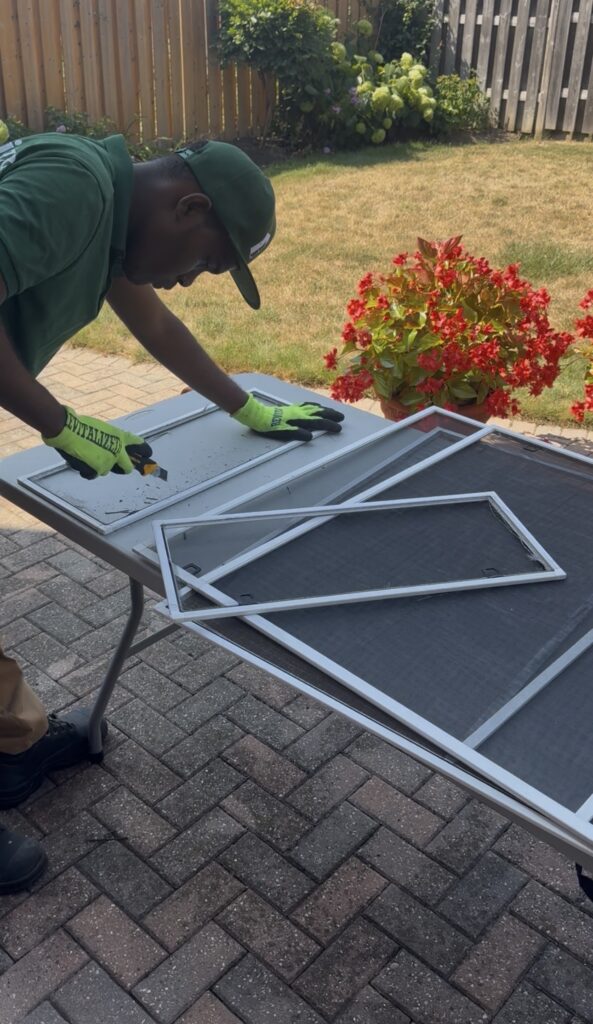
Sometimes, yes. If you’re comfortable with a basic screen repair kit, re-screening a straight, undamaged frame is a manageable DIY project. Spline rolling tools and replacement mesh are widely available and it’s a reasonable weekend task.
Where we’d suggest calling in a professional is anything involving frame assessment. It’s genuinely hard to tell by eye whether a frame is subtly warped versus just slightly out of alignment in the track, and guessing wrong means paying for a repair that won’t hold. A quick professional assessment can save you from buying a repair kit for a problem that actually needs a new frame.
Frequently Asked Questions
How long do window screens usually last before needing replacement? It varies widely based on material, sun exposure, and handling, but fiberglass mesh generally holds up longer than older aluminum mesh, and frames typically outlast the mesh itself unless they’re damaged.
Can I replace just the mesh and keep my existing frame? Yes, as long as the frame is straight, not cracked, and still fits its track properly. This is the most common and most affordable type of screen repair.
Is it worth replacing all my screens at once, even if only one or two are damaged? Not necessarily. We’d only recommend a full-home replacement if most of your screens are the same age and showing similar wear, which is common in homes where the original screens haven’t been touched since the windows were installed.
Do custom or older homes in the GTA need special order screens? Sometimes. Older homes, particularly in established Toronto neighbourhoods, occasionally have window openings that don’t match today’s standard sizing, which means a custom-built frame rather than an off-the-shelf option.
The Bottom Line
If it’s just the mesh, repair it. If the frame is bent, cracked, or won’t sit properly in the track, replace it. That’s the rule of thumb that holds up in the vast majority of cases we see across Toronto and the GTA. When in doubt, a quick in-person look at the frame will tell you which category your screen falls into — and it’s always better to know before you spend money on the wrong fix.
If you’re unsure which category your screens fall into, we’re happy to take a look and give you a straight answer, whether that means a simple re-screen or a full replacement.