
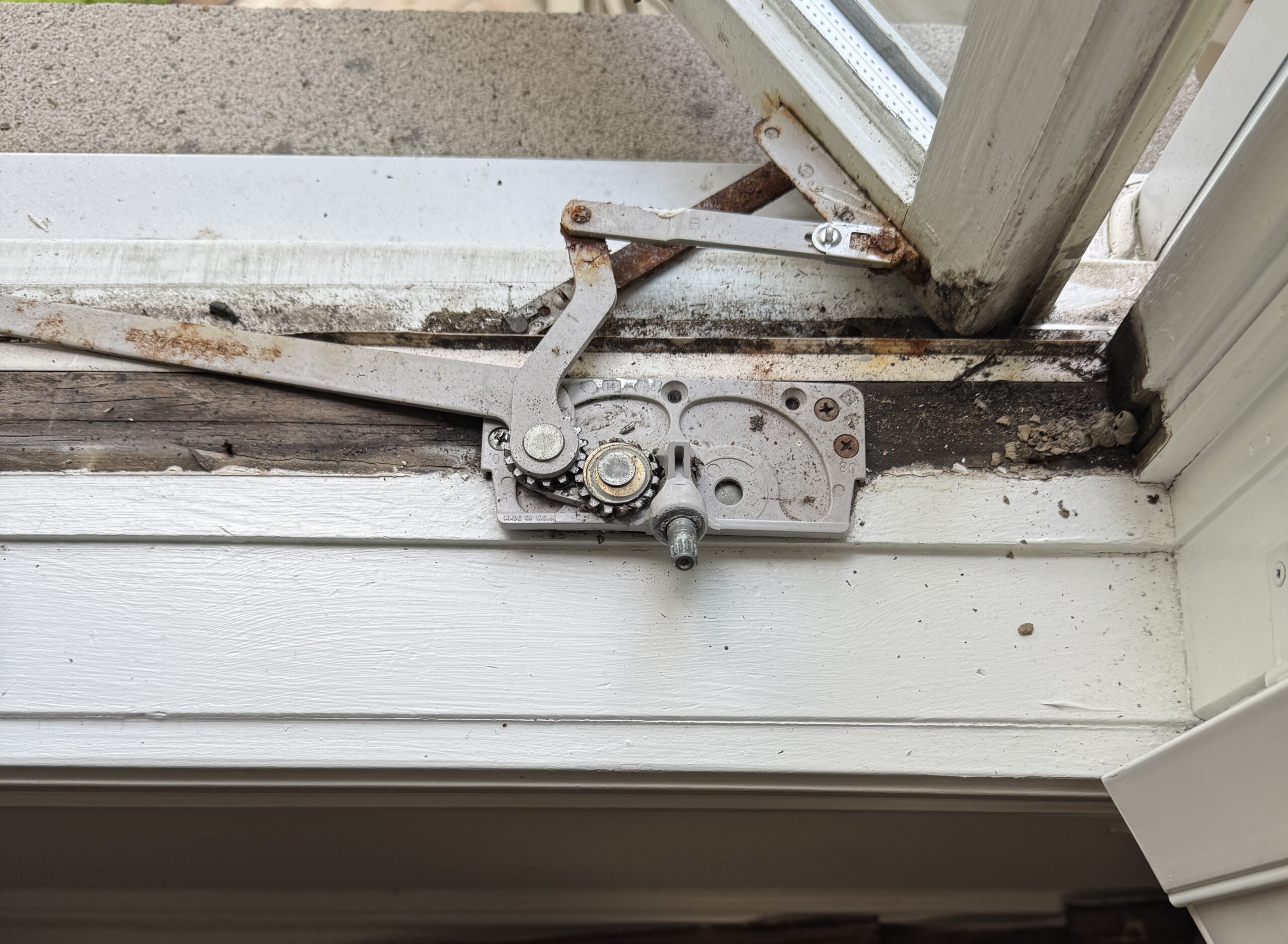
What Causes Window Crank Mechanisms to Fail?
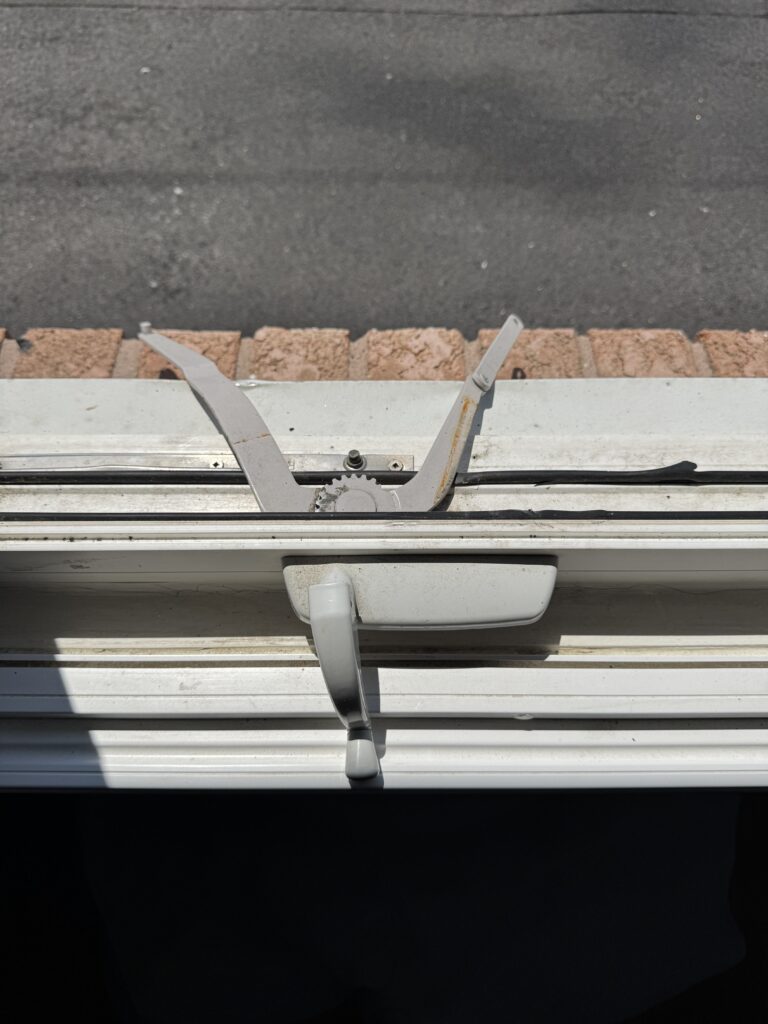
If you’ve ever stood at your casement or awning window, turning the handle and getting nothing but a loose, grinding, or completely frozen response, you already know how frustrating a broken window crank can be. It’s one of the most common questions we hear from homeowners across Toronto and the GTA, and it’s one we’re always happy to answer honestly.
Window cranks are small mechanisms, but they carry a lot of responsibility. They’re what allow you to open your windows for fresh air, close them tightly for insulation, and keep your home secure. When they fail, it’s rarely just an inconvenience — it can also point to bigger issues with your window’s seal, energy efficiency, and even its structural integrity.
In this article, we’re going to walk through exactly what causes window crank mechanisms to fail, how to tell if yours is on its way out, and what your options are for getting it fixed. Our goal is always to give you the same information we’d want if we were in your shoes, so you can make a confident decision about your home.
What Is a Window Crank, and Why Does It Matter?
Before we get into the “why it breaks” part, it helps to understand what a window crank actually is. A window crank is the hand-operated mechanism, usually found on casement or awning-style windows, that connects to a gear system inside the window frame. When you turn the handle, that gear system pushes or pulls an arm that opens and closes the window sash.
It sounds simple, and in principle it is. But that simplicity is deceiving, because the crank mechanism is made up of several small moving parts working together: gears, a scissor arm, screws, and a track the arm slides along. If even one of those pieces wears down, rusts, or breaks, the whole system can stop functioning properly.
The Most Common Causes of Window Crank Failure
1. Age and Regular Wear
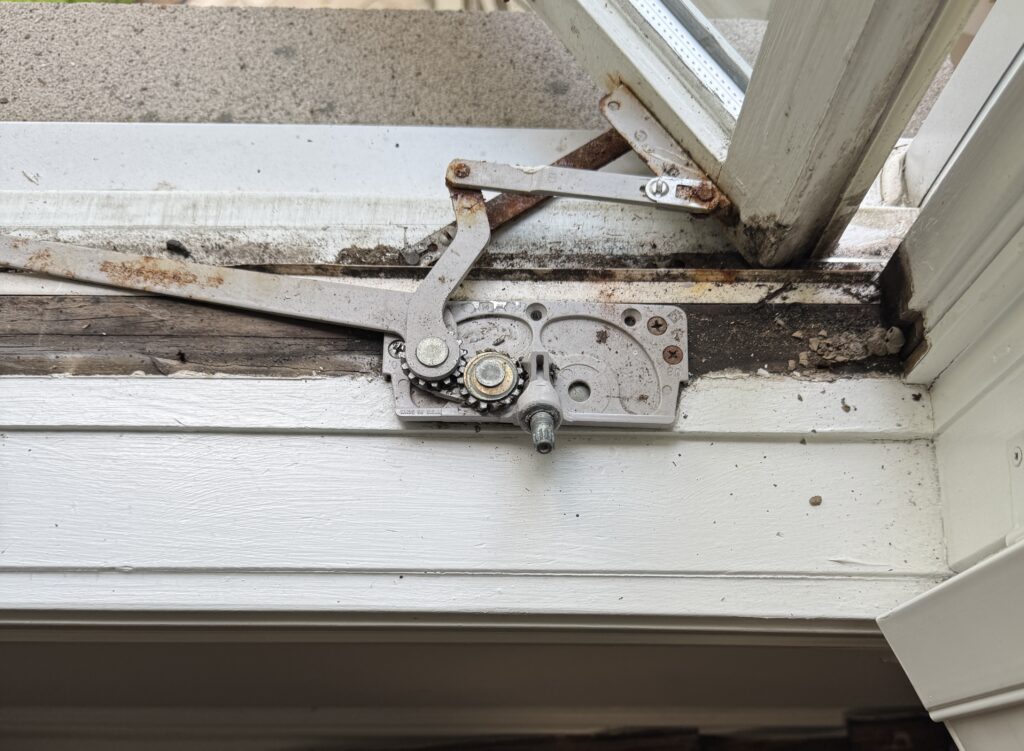
Like most mechanical parts in your home, window cranks wear out simply from being used over and over again for years. Every time you open and close your window, the gears inside the crank mechanism experience a small amount of friction. Over the course of ten, fifteen, or twenty years, that friction adds up. Eventually, the teeth on the gears can wear smooth, which causes the handle to spin without actually moving the window, or to feel loose and disconnected.
This is one of the most natural causes of failure, and honestly, it’s not something you can always prevent. Windows are meant to be used, and mechanisms will eventually reach the end of their functional life.
2. Rust and Corrosion
This is a big one, especially here in Toronto and the greater GTA, where we deal with humid summers, cold and salty winters, and everything in between. Moisture is the number one enemy of metal window hardware. When condensation builds up on or inside a window frame, or when winter road salt and slush make their way onto ground-floor windows, the metal components of the crank mechanism — particularly the gears and the scissor arm — can start to rust.
Once rust sets in, it doesn’t just sit there. It actively eats away at the metal, causing gears to seize up or arms to bend and crack. A rusted crank mechanism often feels stiff or makes a grinding noise before it eventually stops working altogether.
3. Broken or Stripped Gears
Sometimes the failure isn’t about age or moisture at all — it’s about the gears themselves being stripped or broken. This can happen if a window was forced open or closed when it was stuck, or if too much pressure was applied to the handle. It can also happen simply from a manufacturing defect in cheaper hardware.
When the gears strip, you’ll usually notice the handle spinning freely without any resistance, and the window sash won’t move at all. This is one of the more frustrating failures because it often happens suddenly, without much warning.
4. A Bent or Damaged Scissor Arm
The scissor arm is the metal arm that extends from the crank mechanism to physically push the window open. If this arm becomes bent — often from someone leaning on an open window, a gust of wind catching the window at an angle, or an accidental bump — it can throw off the whole mechanism. Even a slightly bent arm can cause the window to open unevenly, get stuck partway, or refuse to close all the way, which then affects your seal and insulation.
5. Loose or Missing Screws
It sounds minor, but loose screws are a surprisingly common cause of crank problems. The crank mechanism is fastened to the window frame with small screws, and over time, especially with frequent use, those screws can work themselves loose. When that happens, the whole mechanism can shift slightly out of alignment, which puts uneven pressure on the gears and arm, accelerating wear on the rest of the parts.
6. Dirt, Debris, and Lack of Lubrication
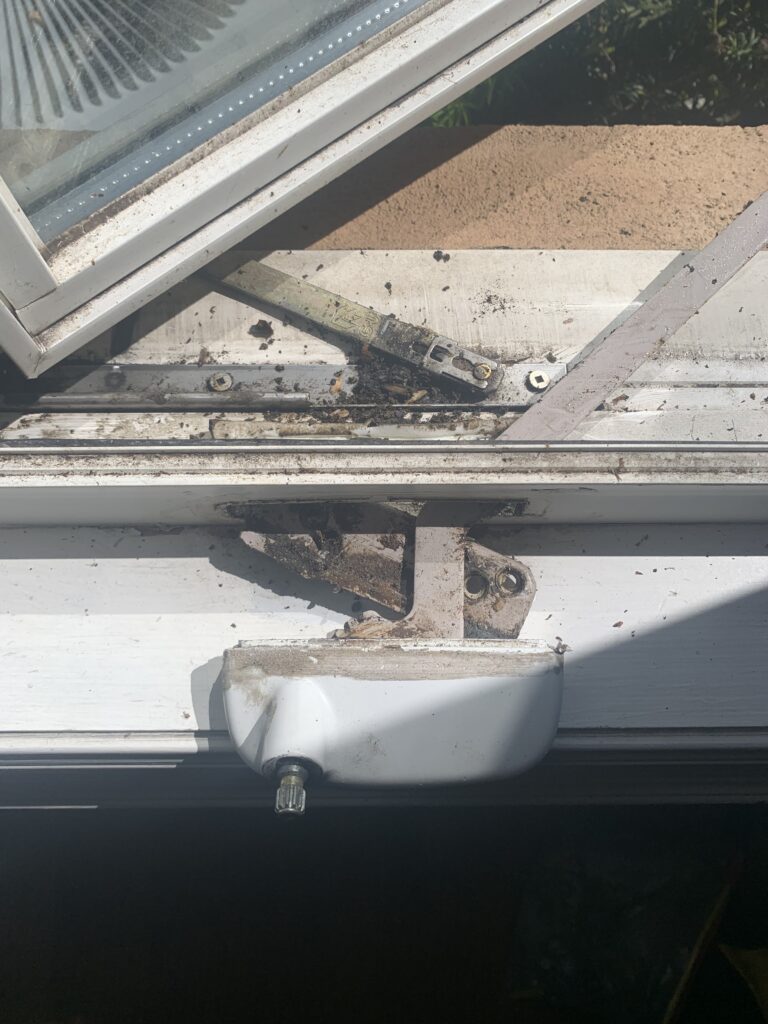
Window tracks and crank mechanisms need to stay relatively clean and lightly lubricated to function smoothly. Dust, pollen, and general debris can build up in the gear housing over the years, especially if a window hasn’t been cleaned or maintained in a while. Combined with dried-out or missing lubricant, this buildup creates extra friction, making the crank harder to turn and speeding up wear on the internal parts.
Signs Your Window Crank Mechanism Is Failing
You don’t need to be an expert to notice the warning signs. Here’s what most homeowners tell us when they call:
- The handle spins but the window doesn’t open or close
- The window opens or closes unevenly, or gets stuck partway
- There’s a grinding, clicking, or scraping noise when turning the handle
- The handle feels loose or wobbly
- The window won’t close tightly, letting in drafts or noise
- Visible rust on the crank arm or gear housing
If any of these sound familiar, it’s worth having the mechanism looked at sooner rather than later. A window that won’t close properly isn’t just an annoyance — it’s an open invitation for drafts, moisture, and higher energy bills, which matters a lot during our Toronto winters.
Can a Window Crank Be Repaired, or Does It Need to Be Replaced?
This is one of the questions we get asked the most, and the honest answer is: it depends on what’s actually broken.
In many cases, especially with stripped gears, worn-out mechanisms, or rusted-through parts, replacement is the more practical and cost-effective solution. Window crank mechanisms are relatively standardized in size, so in most situations we can source a compatible replacement operator without needing to replace the entire window.
In other cases, like a slightly bent scissor arm or loose screws, a simple adjustment or minor repair can get things working smoothly again without needing a full parts replacement.
At Revitalize Windows & Doors, we always start by inspecting the mechanism to figure out exactly what’s causing the issue before recommending a fix. We believe in giving homeowners the real answer, not just the most expensive one, which is why we’ll always tell you honestly if a simple repair will do the trick.
How to Prevent Window Crank Failure in the Future
While some wear and tear is unavoidable, there are a few things you can do to extend the life of your window crank mechanisms:
- Lubricate the mechanism yearly with a silicone-based lubricant, not household oil, which can attract more dirt.
- Avoid forcing the handle if the window feels stuck. Forcing it is one of the fastest ways to strip the gears.
- Clean the tracks and hardware during your regular window cleaning to prevent dirt and debris buildup.
- Check and tighten screws periodically, especially on windows that get used often.
- Address rust early. If you notice small spots of rust forming, addressing it right away can prevent it from spreading to the gears.
How Much Does It Cost to Repair a Window Crank Mechanism?
This is another question we hear constantly, and in true “they ask, you answer” fashion, we think it deserves a straight answer rather than a vague “it depends” and nothing else.
Generally speaking, window crank repairs are one of the more affordable window hardware fixes out there. Because the mechanism is a small, self-contained part, most repairs don’t require touching the glass, frame, or rest of the window. Pricing typically depends on the brand and style of your window (some manufacturers use proprietary operators that cost more to source), whether the mechanism needs a full replacement or just an adjustment, and how many windows need attention at once, since bundling repairs together is usually more cost-effective.
We always provide a clear quote before any work begins, so there are no surprises. In our experience, most single-window crank repairs are a same-day job, which means you’re not stuck living with a drafty or stuck window for long.
Is It Worth Repairing an Old Window Crank, or Should You Replace the Whole Window?
This is a fair question, and one we take seriously, because we’d never want to sell someone a full window replacement when a simple hardware fix would do the job just as well.
In the vast majority of cases, a failing crank mechanism does not mean your window itself is failing. The frame, glass, and seals can all still be in great shape even if the operator hardware has worn out. Replacing just the crank mechanism is almost always the more practical and budget-friendly route, and it’s what we recommend first unless there’s clear evidence of a bigger issue, such as a warped frame, failed seal, or rotting wood around the window.
That said, if your windows are original to a much older home and you’re noticing multiple issues at once, like foggy glass, drafts, and hardware failures all around the same time, that can be a sign that it’s worth having a broader conversation about your windows’ overall condition. We’re always upfront about that distinction, because our priority is helping you make the most sensible decision for your home and your budget, not pushing an unnecessary sale.
Why Toronto and GTA Homeowners Trust Revitalize Windows & Doors
We’ve spent years repairing and replacing window hardware for homeowners, property managers, and condominium boards across Toronto and the surrounding GTA, and window crank issues are one of the repairs we handle most often. Our climate here is tough on window hardware between humid summers and salty, freezing winters, which is exactly why we always recommend catching these issues early rather than waiting for a full mechanism failure.
When you reach out to us, we’ll take a look at your specific window crank issue, explain honestly what’s going on, and walk you through your repair or replacement options. We’re not interested in upselling you on something you don’t need. Our goal is always to fix the actual problem in front of us, using quality hardware that will hold up in our local climate.
If your window handle is spinning freely, grinding, or simply won’t budge anymore, it’s a good sign it’s time for a repair. You can learn more about how we handle these repairs on our window crank and hardware repair page, where we go into more detail on the process and what to expect.
Serving Homeowners Across Toronto and the GTA
Whether you’re in the downtown core or out in the surrounding suburbs, our team at Revitalize Windows & Doors is equipped to handle window crank repairs and replacements efficiently and affordably. We understand how frustrating it is to deal with a window that won’t open or close properly, especially when the weather starts to change. If you’re located in the city, take a look at our dedicated Toronto window and door repair services page to see how we can help.
Ready to Fix Your Window Crank Mechanism?
A broken window crank doesn’t have to mean a broken window. In most cases, it’s a quick, straightforward fix once you know what’s causing the problem. If you’re dealing with a stuck, loose, or grinding window crank anywhere in Toronto or the GTA, our team is ready to help.
Reach out through our contact form to schedule a service appointment, and we’ll get your windows opening and closing smoothly again.

Leave a Reply