
How to Fix a Dragging Commercial Door in Toronto & GTA

A commercial door that drags across the floor might not seem like a huge deal when it first starts happening. But ignore it for a few weeks, and you’re looking at scratched flooring, worn-out hardware, security problems, and potentially some serious accessibility violations. In a commercial setting, that’s not just annoying—it’s expensive.
Here in Toronto and the GTA, commercial doors take a beating. Constant use, extreme weather, and temperature swings all contribute to alignment issues over time. Let’s walk through why commercial doors start dragging, what you can fix yourself, what needs a professional, and when you absolutely need to call someone before things get worse.
Whether you’re running a storefront, managing an office building, overseeing a warehouse, or dealing with a multi-unit property, this guide will help you figure out your best move.
What We Mean by a “Dragging” Commercial Door
A dragging door is pretty much what it sounds like—instead of swinging or sliding smoothly, the door:
- Scrapes along the floor
- Rubs against the frame
- Feels heavy or stiff when you try to open it
- Won’t close all the way
- Gets stuck at certain points
This isn’t just frustrating. It usually means something structural or mechanical is wrong, and it needs to be addressed sooner rather than later.
Why Toronto Commercial Doors Develop Dragging Problems
Our climate doesn’t do doors any favors. The constant cycle of freezing winters and hot summers makes materials expand and contract, which throws alignment off over time.
Here’s what typically causes commercial doors to start dragging:
Worn or failing hinges: Commercial doors are heavy and get used constantly. Hinges loosen, wear down, or bend under all that weight. When they start to give, the door sags and drags at the bottom.
Building settlement: Buildings settle—especially older commercial properties around Toronto. When that happens, door frames can shift just enough to throw everything out of square.
Frame misalignment: If the frame moves due to structural shifting or poor installation, the door starts rubbing against one side or the floor.
Moisture swelling: Wood or composite doors swell when exposed to humidity, rain, or snow. Entryway doors get hit with this constantly.
Flooring issues: New flooring that wasn’t accounted for, or worn thresholds that have changed height, can mess with door clearance.
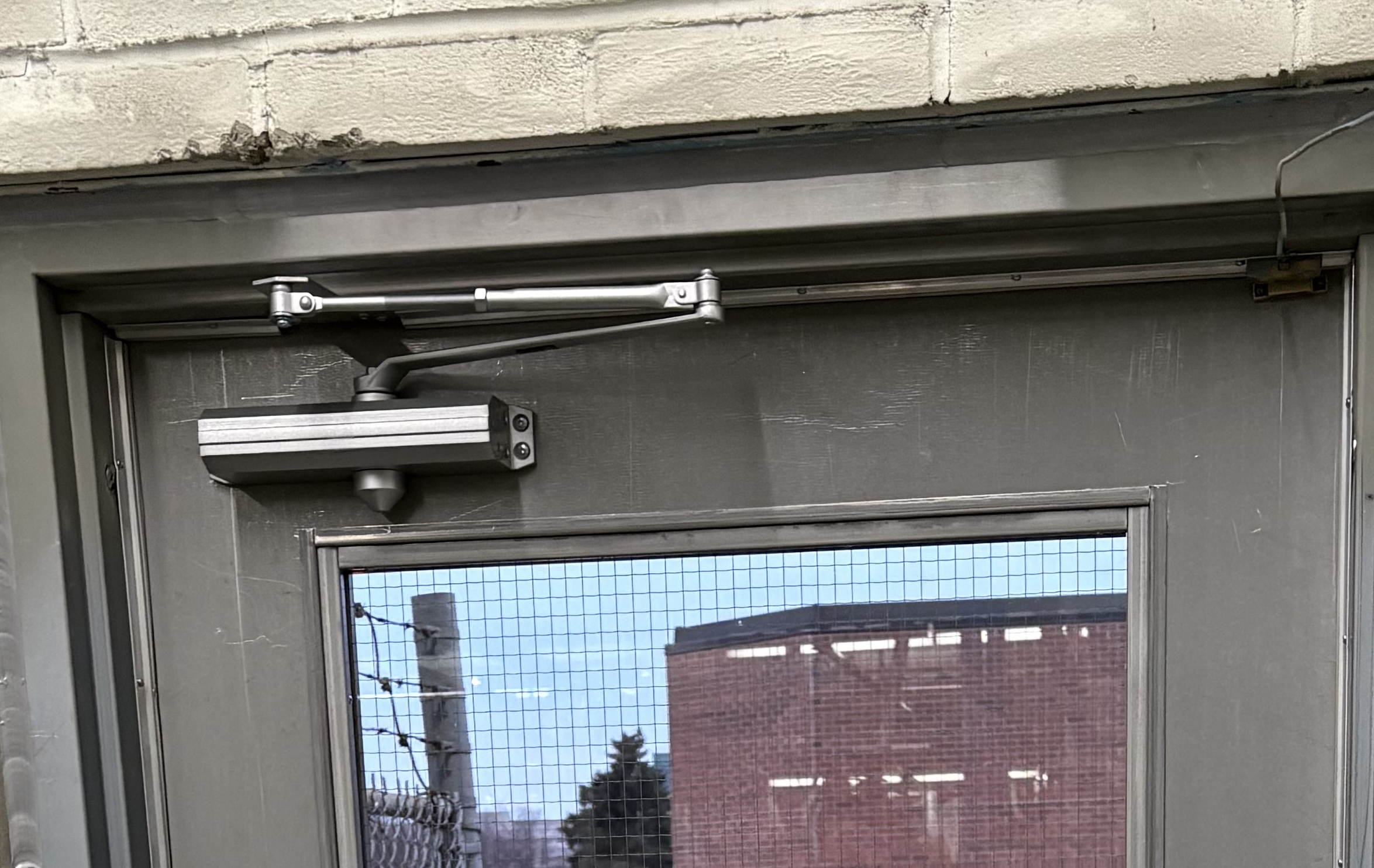
Door closer problems: Hydraulic or automatic closers that aren’t adjusted right can pull the door downward over time.
Why You Can’t Just Live With It
Putting off repairs on a dragging door leads to:
- Damage to both the door and the frame
- Hinges failing completely
- Flooring getting scratched or broken
- AODA compliance issues (accessibility violations)
- Fire code problems
- Security gaps
- Liability headaches you don’t need
For commercial properties in Toronto and the GTA, these problems escalate fast and cost real money.
How to Actually Fix a Dragging Commercial Door
Some minor issues you can catch early. Others need professional hands from the start.
Figure Out Where It’s Dragging
First, see where the door is making contact:
- Bottom edge scraping the floor?
- Rubbing on the hinge side?
- Catching on the latch side?
- Hitting at the top corner?
This tells you where to focus.
Check the Hinges
Loose or damaged hinges are behind most dragging issues.
Look for:
- Screws that have worked loose
- Hinge pins that are worn out
- Hinges that are bent or sagging
Sometimes you can tighten things up or replace worn pins. But with heavy commercial doors, hinge replacement really should be done by someone who knows what they’re doing. These doors can seriously hurt you if something goes wrong.
Look at the Door Closer
Door closers that pull unevenly cause sagging over time.
You might need to:
- Adjust the tension settings
- Realign the closer arm
- Replace an old or worn-out closer
Check Frame Alignment
If the frame has shifted, no amount of tinkering with the door itself will fix the problem.
You might need:
- Frame adjustment
- Re-shimming the frame
- Actual structural correction
This almost always requires professional tools and experience. Not really a DIY situation.
Address Floor or Threshold Problems
If the door clears the frame fine but scrapes the floor:
- Check the threshold for damage or changes
- Look for uneven flooring
- See if recent flooring work changed the height
Sometimes adjusting the door height or fixing the threshold solves everything.
Trimming the Door (Proceed With Caution)
For wood doors, minor trimming can help. But here’s the thing—most commercial doors, especially fire-rated or metal ones, should NOT be trimmed. You can violate safety codes and void certifications. Not worth the risk.
When DIY Is Fine vs. When You Need a Pro
You might be okay handling:
- Tightening loose hinge screws
- Basic door closer adjustments
- Catching issues early before they get bad
You need a professional for:
- Heavy steel or aluminum doors
- Fire-rated doors
- Glass storefront doors
- Severe dragging or scraping
- Any frame or structural issues
Trying to DIY commercial door repairs when you shouldn’t can void warranties, break fire or safety codes, make the problem worse, and end up costing you way more down the line.
Fire-Rated Doors: Don’t Mess Around
A lot of commercial doors in Toronto are fire-rated and have to meet strict regulations.
Here’s what you need to know: altering a fire-rated door without proper certification can result in failed inspections, insurance nightmares, and legal liability you definitely don’t want.
Professional service ensures you stay compliant with Ontario building and fire codes. This isn’t the place to cut corners.
Preventing Dragging Problems Before They Start
Regular maintenance goes a long way with commercial doors.
Smart preventative steps:
- Schedule annual door inspections
- Keep hinges and hardware lubricated
- Adjust closers seasonally (they need different settings in winter vs. summer)
- Deal with small issues before they become big ones
- Use actual commercial-grade hardware, not residential stuff
Preventative maintenance costs way less than emergency repairs and building shutdowns.
Why Toronto Businesses Work With Revitalize Windows and Doors
We’ve been diagnosing and fixing commercial door issues across Toronto and the GTA long enough to know that most dragging problems have a root cause that needs addressing—not just a quick patch.
What we bring:
- Expert door alignment and repair
- Hinge and closer replacement
- Frame adjustment when needed
- Fire-rated door compliance
- Fast, reliable service for commercial properties
We don’t just slap a bandaid on symptoms. We fix what’s actually wrong.
Bottom Line on Dragging Commercial Doors
A dragging commercial door isn’t something you can ignore and hope it gets better. While some minor issues can be caught and fixed early, most commercial doors need professional assessment to ensure safety, durability, and code compliance—especially in high-traffic Toronto properties.
If your commercial door is scraping, sticking, or just not operating the way it should, deal with it now before it turns into a bigger problem.
Your commercial door should open and close smoothly every time. Let’s make that happen. Give Revitalize Windows and Doors a call and get a Free Quote.