
Why Is My Window Hinge So Rusty?
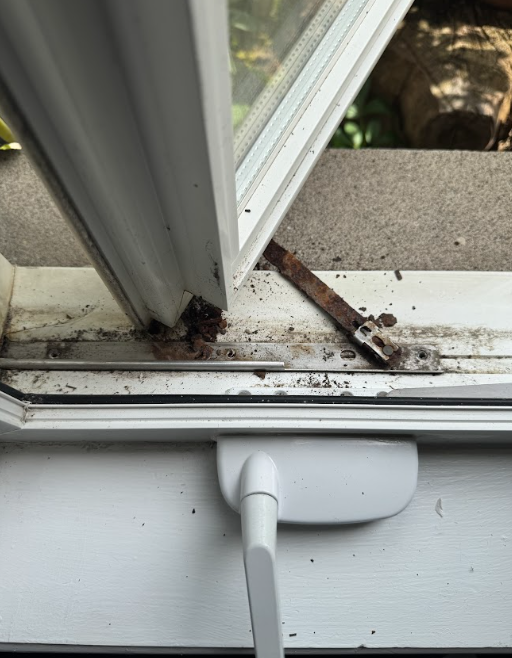
You open your casement window for the first time in a while and notice it. The metal arms down in the bottom corner, the part that lets the sash swing out, are coated in orange flakes. Maybe the window groaned as it opened. Maybe it stopped halfway and refused to go further. Or maybe it still works fine, but the rust looks bad enough that you’re wondering if something is about to snap.
Rusty window hinges are one of the most common things homeowners ask us about, and it’s a fair question. Windows are supposed to last for decades, so why is a small piece of metal giving up after only a few years?
Let’s answer that honestly: why hinges rust, how serious it is, what you can do yourself, and what replacement costs.
What a Window Hinge Actually Does
On most casement and awning windows in Toronto and the GTA, the hinge isn’t a simple door-style hinge. It’s usually a four-bar or friction hinge, a set of flat metal arms that pivot and slide in a track along the top and bottom of the sash. When you turn the crank, the operator pushes the window out, and the hinges guide it along a controlled path so the sash opens evenly and closes tight against the weatherstripping.
The hinge carries the sash’s weight, keeps it aligned, and helps it seal. When it rusts, all three jobs suffer, and a binding hinge strains the crank operator, which is why rusty hinges and stripped cranks so often show up together.
The Real Reasons Your Window Hinge Is Rusting
Rust needs two things: iron-based metal and moisture. Window hinges sit in one of the wettest spots in your house, so once you understand where the water is coming from, the rust starts to make sense. Here are the causes we see most often.
1. Indoor Condensation Running Down the Glass
This is the number-one cause in our area, and it surprises a lot of people. During a Toronto winter, warm indoor air hits cold glass and turns into water. That water runs down the pane, collects on the bottom of the frame, and pools right where the bottom hinge track sits.
Kitchens, bathrooms, bedrooms, and tightly sealed condos get hit hardest. If you’ve ever wiped a puddle off a windowsill in February, your hinge has been sitting in that same water all season.
2. Water Getting In From the Outside
The bottom of a casement frame is designed to shed water through small weep holes. When those holes get clogged with dirt, leaves, dead bugs, or construction dust, rainwater has nowhere to go. It sits in the sill track and soaks the hinge.
Worn weatherstripping does the same thing, letting wind-driven rain push past the sash. It’s especially common in high-rise buildings across downtown Toronto, where windows take rain sideways.
3. The Hinge Wasn’t Built for Our Climate
Not all window hinges are made from the same material. Quality hinges are typically stainless steel, which resists corrosion well. Lower-cost hinges, common in builder-grade windows, are often regular steel with a thin zinc or painted coating.
Every time the window opens and closes, the moving parts wear that plating away at the pivots. Once bare steel meets moisture, rust spreads quickly. If your windows came standard with a new build in Vaughan, Brampton, Markham, or Mississauga in the last 15 to 20 years, there’s a good chance this is part of the story.
4. Road Salt, Lake Air, and Pollution
Salt speeds up corrosion dramatically. Homes near busy roads like the 401 or the DVP get a fine salt mist all winter that settles on window hardware. Properties near Lake Ontario also deal with more humid air in the warmer months.
5. No Cleaning or Lubrication
Dirt and grit build up in the hinge track and hold moisture against the metal like a sponge. Without periodic cleaning and lubrication, the protective layer wears away and rust moves in.
6. Age
Even good hinges wear out. If your windows are 20 or more years old and the hinges are original, rust is a normal part of aging.
Is Rust on a Window Hinge Actually a Problem?
It depends on how far it has gone. Here’s how we’d break it down.
Light surface rust. A little orange discoloration on the arms, but the window opens smoothly and closes tightly. This is mostly cosmetic for now, and it’s the best time to act. A good cleaning and lubrication can slow it down considerably.
Moderate rust. Flaking, bubbling, or rough patches near the pivot points. The window may squeak, feel stiff, or need more effort to crank. At this stage, the rust is starting to affect how the hinge moves, and the crank operator is working harder than it should.
Severe rust. Pitting, holes, arms that feel loose or wobbly, rivets that have corroded through, or a sash that drops, drags, or won’t line up with the frame anymore. This is a safety and security concern. A failed hinge can let the sash sag or, in the worst cases, come loose entirely. On an upper floor or in a condo tower, that’s not something to gamble on.
Can You Fix a Rusty Window Hinge Yourself?
For light rust, yes, and we’re happy to tell you how. It’s a simple job that takes about 20 minutes per window.
What you’ll need: a stiff nylon brush or old toothbrush, a vacuum with a crevice tool, a clean cloth, a fine abrasive pad or fine steel wool, and a silicone-based or dry PTFE lubricant.
- Open the window fully so you can reach both the top and bottom hinge tracks.
- Vacuum out the track. Get rid of loose dirt, bugs, and debris first so you’re not grinding grit into the metal.
- Scrub the rust. Use the brush or abrasive pad to remove loose surface rust from the arms and pivot points. Don’t go overboard, you just want the flakes off.
- Wipe everything clean with a damp cloth, then dry it completely. Leaving moisture behind defeats the purpose.
- Lubricate the pivot points and sliding track. A light spray of silicone or dry lubricant is ideal because it doesn’t attract dirt the way heavy grease does. Avoid oily products that turn into a sticky paste in the track.
- Open and close the window several times to work the lubricant into the moving parts.
- Clear the weep holes on the outside bottom of the frame with a thin wire or pipe cleaner so water can drain.
Skip the spray paint. It gums up the moving parts and peels quickly at the pivots.
When DIY isn’t the right call: If the hinge is pitted, bent, loose, or the window sags, cleaning won’t bring it back. Replacement usually means removing a heavy sash, and the new hinge must match your window’s size, brand, and track style exactly. That’s where most DIY attempts run into trouble.
What Replacing a Rusty Window Hinge Looks Like
We start by identifying exactly what’s on your window, since hinges vary in length, stack height, and track design. The right match is what makes the window seal properly afterward.
From there, we remove the sash, take out the old hinges, clean up the track area, and install new hardware. Wherever possible, we use stainless steel hinges so you’re not dealing with the same rust problem again in a few years. Then we reinstall the sash, adjust it so it closes evenly against the weatherstripping, and check the crank operator while we’re there. If the operator has been strained by fighting a seized hinge, it often makes sense to replace both at the same time.
You can see the full range of hardware work we handle on our window repair services page, including hinges, cranks, locks, and operators.
What Affects the Cost of Window Hinge Replacement?
We get asked this all the time, and we’d rather be upfront than vague. Pricing depends on a few key factors:
- How many windows need work. Doing several windows in one visit is more cost-effective per window than calling someone out for one at a time.
- Hinge size and type. Larger sashes need longer, heavier hinges. Specialty or discontinued hardware can cost more to source.
- Material. Stainless steel hinges cost a bit more upfront but last much longer in our climate.
- Window location and access. Ground-floor windows are simpler than second-storey windows or units on high floors.
- Related repairs. If the crank operator, lock, or weatherstripping also needs attention, that adds to the job, but it often saves you a second visit.
Replacing hinges costs a small fraction of a new window. If the frame and glass are sound, there’s no reason to replace the whole unit over rusted hardware.
How to Keep Your Window Hinges From Rusting Again
A few small habits go a long way, especially through a long GTA winter:
- Control indoor humidity. Run bathroom and kitchen exhaust fans, and keep indoor humidity in a comfortable range during the colder months. Less condensation means less water sitting on your hinges.
- Clean and lubricate hinges once or twice a year. Spring and fall are perfect times.
- Keep weep holes clear so rainwater drains out of the frame.
- Check weatherstripping each fall and replace it if it’s flattened, cracked, or pulling away.
- Upgrade to stainless steel when it’s time to replace. It’s the single best long-term fix.
Quick Answers to Common Questions
Is it normal for only the bottom hinge to rust? Very normal. The bottom hinge sits where condensation and rainwater collect, so it usually rusts faster than the top one.
Do I need a new window if the hinges are rusted? In most cases, no. Hinges are replaceable hardware, and swapping them restores the window’s operation without the cost of replacement.
Final Thoughts
A rusty window hinge is almost always a moisture story. Condensation, clogged drainage, worn seals, salt, and lower-grade steel all play a part, and in a climate like ours, they tend to stack up. Catch it early, and a cleaning and a little lubricant may be all you need. Let it go too long, and the hinge will start pulling the rest of your window down with it.
If you’re not sure which stage your hinges are in, we’re happy to take a look. Revitalize Windows & Doors works with homeowners, condo residents, and property managers every day, and we’ll tell you honestly whether you need a cleaning, a new hinge, or nothing at all. Our team at Revitalize Windows & Doors services homes and buildings throughout the city, and you can learn more about our coverage on our Toronto window and door repair page.
When you’re ready, request your free quote here and send us a photo of the hinge. With the right hardware in place, Revitalize Windows & Doors can have your windows opening smoothly and sealing tight again before the next cold snap rolls in.

Leave a Reply