
What Is the Lifespan of a Wood Window in Toronto and the GTA?
If you own a wood window in Toronto or anywhere in the GTA, you’ve probably asked yourself the same question at least once: how much longer is this thing going to last? Maybe the paint is peeling on the sill. Maybe the sash sticks every August when the humidity rolls in. Maybe you just bought a century-old home in the Annex or Leslieville and you’re staring at original windows wondering if they’re treasures or time bombs.
Here’s the honest answer from our team at Revitalize Windows & Doors. A wood window in Toronto and the GTA can last anywhere from 20 years to well over 100 years. That’s a huge range, and we know it isn’t the neat number you were hoping for. But the truth is that wood windows don’t have a fixed expiry date. How long yours lasts depends on the type of wood, how it was built, how it’s been maintained, and how it has handled our brutal local climate.
In this guide, we’re going to break down exactly what shortens or extends the life of a wood window in our region, how to tell where your windows sit on that timeline, and when it makes sense to repair rather than replace. We’ll be upfront about the good and the bad, because you deserve straight answers before you spend a dollar.
The Short Answer: How Long Do Wood Windows Last in the GTA?
Let’s put some real-world numbers on it.
Well-maintained, high-quality wood windows: 60 to 100+ years. Plenty of homes across Toronto’s older neighbourhoods still have original wood windows from the 1920s and 1930s that open, close, and seal reasonably well.
Average wood windows with decent upkeep: 30 to 50 years. This covers many mid-century and later wood-framed windows that got repainted or restained now and then and were fixed when something broke.
Neglected or poorly built wood windows: 15 to 25 years, sometimes less. If water gets in and stays in, wood rots, and it can happen faster than most homeowners expect.
Notice that the frame itself usually outlives the parts attached to it. The wood sash and frame might be perfectly sound at year 50, while the glass seal, the hardware, the weatherstripping, and the finish have already needed attention two or three times. That’s an important distinction, and it’s the reason so many “old” windows are actually worth saving.
Why Our Climate Is Hard on Wood Windows
Toronto and the GTA put windows through a full workout every single year. Few climates in Canada swing as widely, and wood reacts to all of it.
Freeze-thaw cycles. In a typical Toronto winter, temperatures bounce above and below zero again and again. Moisture that sneaks into a tiny crack in the paint or caulking freezes, expands, and widens the crack. Then it thaws and more water gets in. Repeat that for a few winters and a hairline gap becomes a rotting corner.
Humidity in summer. Wood absorbs and releases moisture as the air changes. In humid GTA summers, sashes can swell and stick. In dry winter months, they shrink and open up gaps. This constant movement stresses joints, paint, and seals.
None of this means wood windows are a bad choice. It means they need a protective barrier, and that barrier needs to be kept intact.
The Five Factors That Decide How Long Your Wood Windows Last
1. The Type and Quality of the Wood
Older windows were often made from dense, slow-growth wood like old-growth pine, fir, or oak. That tight grain resists rot far better than the faster-grown lumber used in a lot of later production windows. This is exactly why a 90-year-old window can outperform a 25-year-old one. If your home was built before the 1950s, there’s a good chance your windows are made from exceptional material.
2. The Finish: Paint, Stain, and Sealant
The finish is your window’s raincoat. When it’s intact, water rolls off. When it cracks, bubbles, or peels, water goes in. Most wood windows in our region need their exterior finish refreshed every 5 to 10 years, and sooner on sun-baked or wind-exposed sides of the house. Skipping this step is the single most common reason we see wood windows fail early.
3. Drainage and Water Management
Good wood windows are designed so that water has somewhere to go. Sloped sills, drip edges, and clear weep paths all move moisture away from the frame. When these get clogged with paint, dirt, or debris, water sits against the wood. Standing water is the enemy.
4. Hardware and Moving Parts
A window that’s difficult to open puts extra strain on the frame. Worn cranks, failing hinges, and broken locks lead people to force sashes open or leave them slightly ajar, which lets in drafts and water. Healthy hardware protects the wood around it.
5. Seals, Glazing, and Weatherstripping
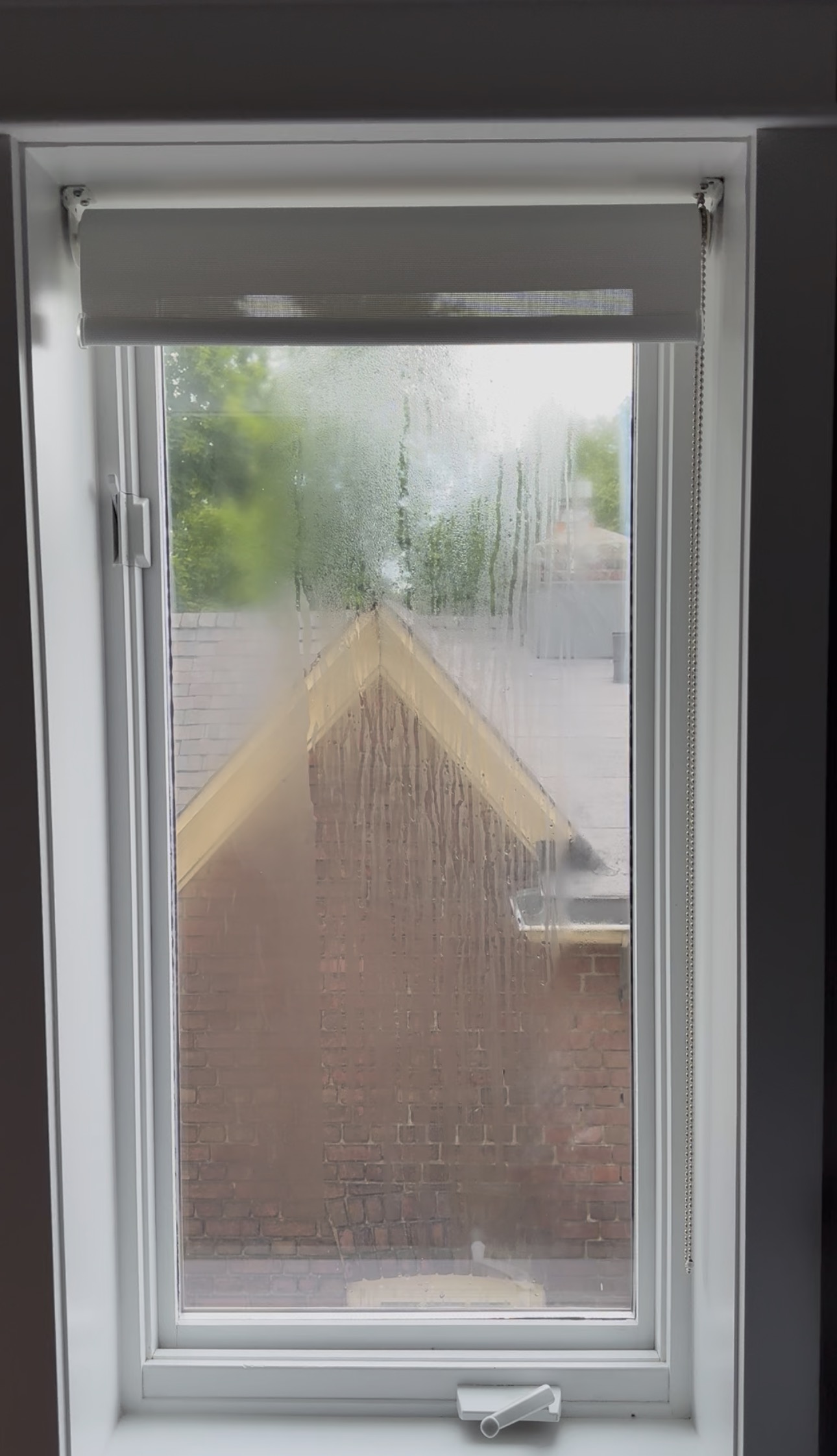
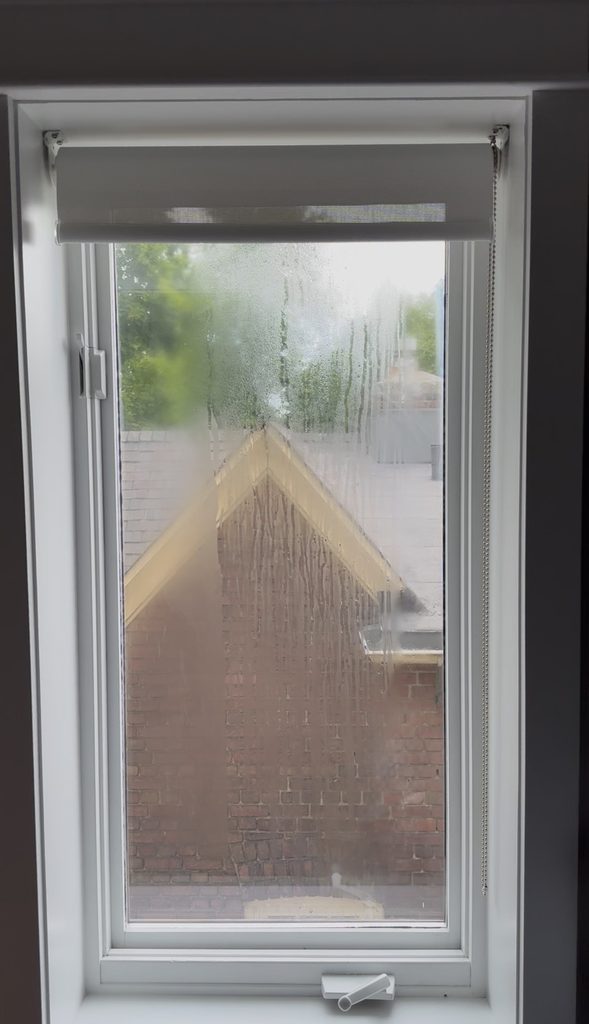
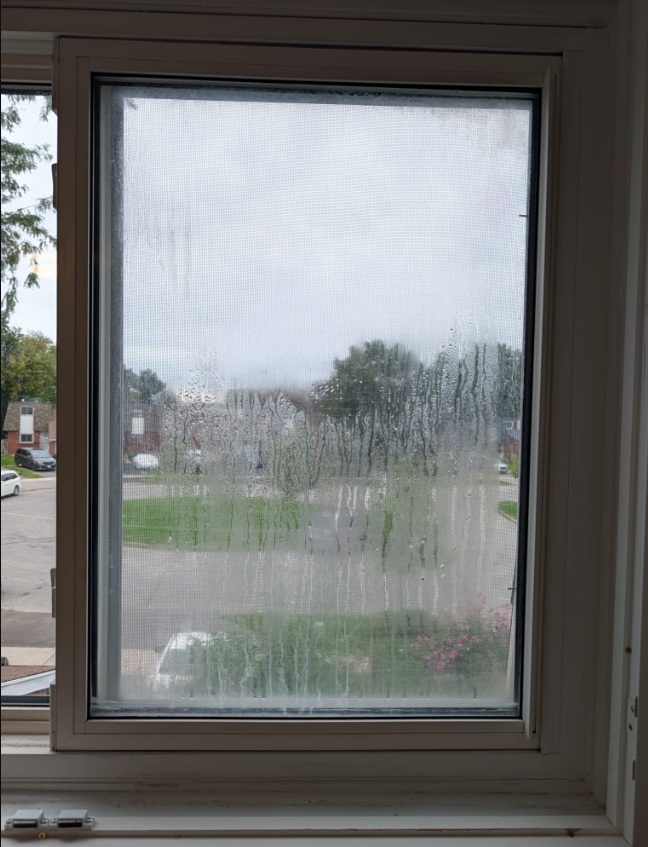
Wood windows with double or triple glazing rely on sealed glass units. Those seals typically last somewhere around 15 to 25 years, though quality varies. When a seal fails, moisture gets between the panes and you’ll see fog or condensation that won’t wipe away. Weatherstripping also compresses and cracks with age. Neither of these problems means the wooden window itself is finished.
Signs Your Wood Windows Are Nearing the End (or Just Need Help)
Not every symptom is a death sentence. Here’s how we think about what you might be seeing.
Probably fixable:
- A window that sticks, drags, or won’t stay open
- A crank that spins without moving the sash
- A lock that doesn’t catch properly
- Cracked or missing weatherstripping and drafts you can feel on a windy day
- Foggy glass between the panes
- Peeling or chalky paint with solid wood underneath
Often signals serious deterioration:
- Wood you can easily push a screwdriver tip into (the classic rot test)
- Crumbling or spongy frame sections
- Sashes so warped they no longer fit the frame
- Widespread rot across multiple windows
A simple test you can do right now: take a flat screwdriver and gently press it into the lower sill and bottom corners of the frame. Sound wood resists. Rotted wood gives way. If it’s just a small, isolated patch, the situation is usually manageable. If it’s widespread, that’s a different conversation.
Repair or Replace? How We Look at It
This is where a lot of homeowners get nudged toward a full replacement they may not need. Window replacement companies have a financial reason to tell you everything has to go. We see it differently.
Replacing a window can cost thousands of dollars per opening, and in many Toronto heritage-conscious neighbourhoods, original wood windows add real character and resale appeal. If the frame is structurally sound, repairing the parts that wear out is often far smarter and far cheaper than tearing everything out.
Here’s the rule of thumb we share with homeowners:
- If the frame and sash are solid and the problems are hardware, glass seals, drafts, or screens, repair is almost always the better value.
- If rot is limited to small, accessible areas, the window can often be saved with proper repair and a good finish.
- If rot is extensive, structural, or across the whole window, replacement may be the honest recommendation.
We’d rather tell you a window is worth saving than sell you a repair that won’t hold. That’s how we’ve always approached this work at Revitalize Windows & Doors, and it’s why so many of our customers across Toronto call us back for their next project.
Most of the issues that make wood windows feel “worn out” are actually component problems. If the real trouble is a failed crank, a worn hinge, a broken lock, or a drafty sash, our window repair services can often bring a tired window back to smooth, secure operation without the cost and disruption of replacement.
How to Make Your Wood Windows Last Longer
If you want to push your windows toward the long end of that lifespan range, a few habits make a big difference.
Inspect twice a year. A quick spring and fall walk-around is enough. Look at the paint, the caulking, the sills, and the corners. Catching a small crack early costs a fraction of what it costs after water has done its damage.
Keep the finish healthy. Don’t wait until paint is falling off in sheets. Touch up chipped areas promptly and repaint or restain on schedule. Pay extra attention to the bottom rail and sill, since that’s where water collects.
Maintain your caulking and weatherstripping. Cracked exterior caulk lets water in. Worn weatherstripping lets air in and drives up heating costs. Both are inexpensive to address compared with the damage they prevent.
Cost Considerations: Why Early Action Saves Money
Every window problem gets more expensive the longer it’s ignored. A failing seal on one pane of glass is a modest fix. A failed seal combined with a leaking frame that’s let moisture rot the sill is a much bigger bill. A sticking window you keep forcing can damage the sash and frame beyond easy repair.
Weatherproofing matters here too. Good weatherstripping and sealing don’t just protect the wood, they keep your heating and cooling bills down. In a city where winter heating costs add up quickly, sealing the gaps around an older wood window can make a noticeable difference in comfort without changing the window itself.
If your windows are in decent shape but drafty, a tune-up and resealing might be all you need to get another 10 to 20 years out of them. If you own a heritage-listed Toronto home, check with the City before planning any major exterior change, since repairing original windows is often the preferred route.
So, How Long Will Your Wood Windows Last?
The best way to answer that for your specific home is to look at the condition rather than the calendar. A 70-year-old window with solid wood, working hardware, and a maintained finish can easily outlast a 20-year-old window that was neglected from day one.
If your wood windows are structurally sound, there’s a very good chance they have many years left, and the problems you’re noticing are fixable. If rot has taken hold in a serious way, we’ll tell you that honestly too.
Whatever you’re dealing with, you don’t have to guess. Our team provides window and door repair across Toronto and throughout the GTA, from Etobicoke and North York to Scarborough, Mississauga, Vaughan, and beyond. We’ll take a look, explain what’s going on in plain language, and give you a fair price on the work that actually needs doing.
Ready to find out where your windows stand? Request your free quote and we’ll help you decide whether your wood windows need a little care or a bigger plan. At Revitalize Windows & Doors, we’d rather help you keep what’s working than sell you something you don’t need.

Leave a Reply