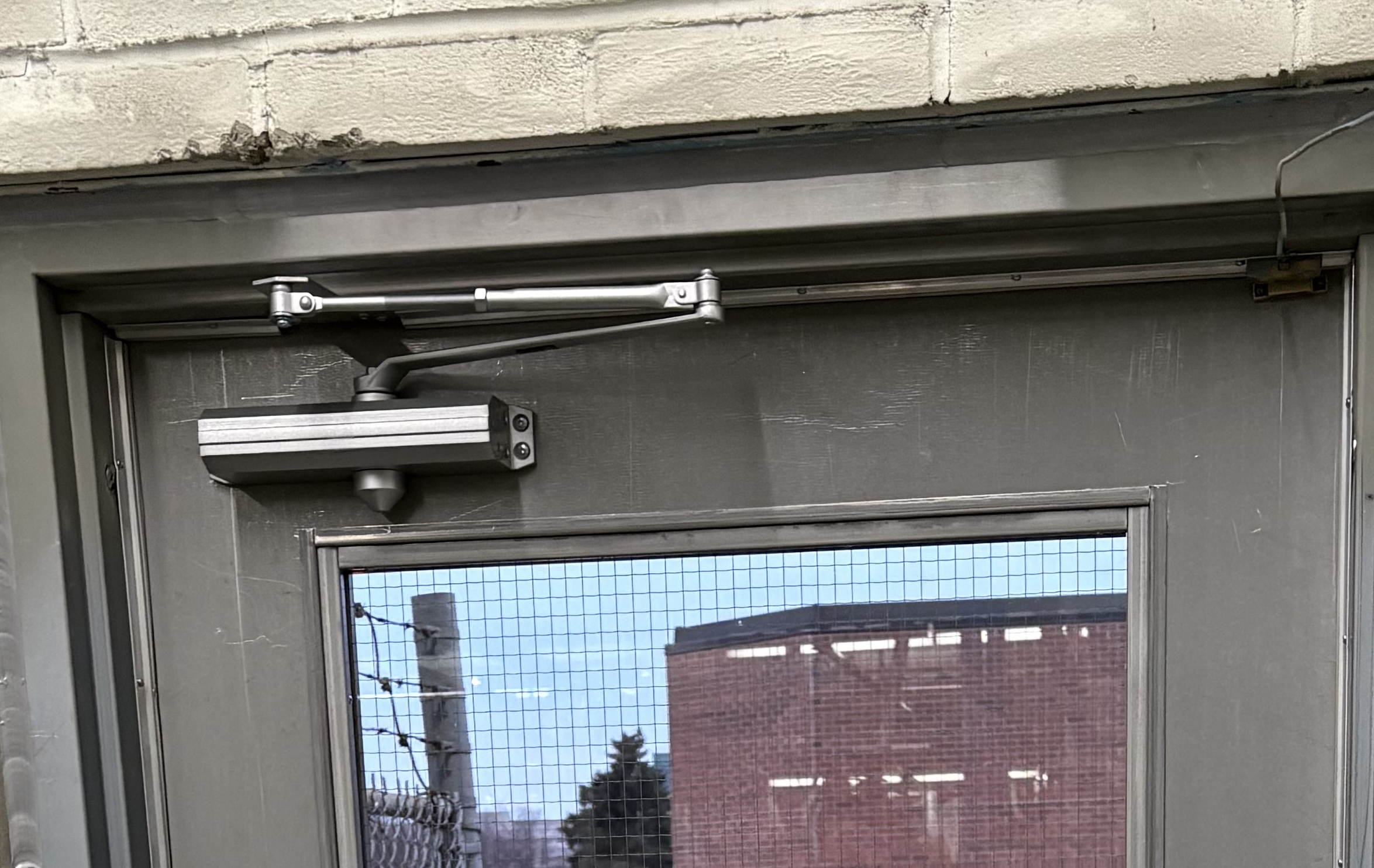
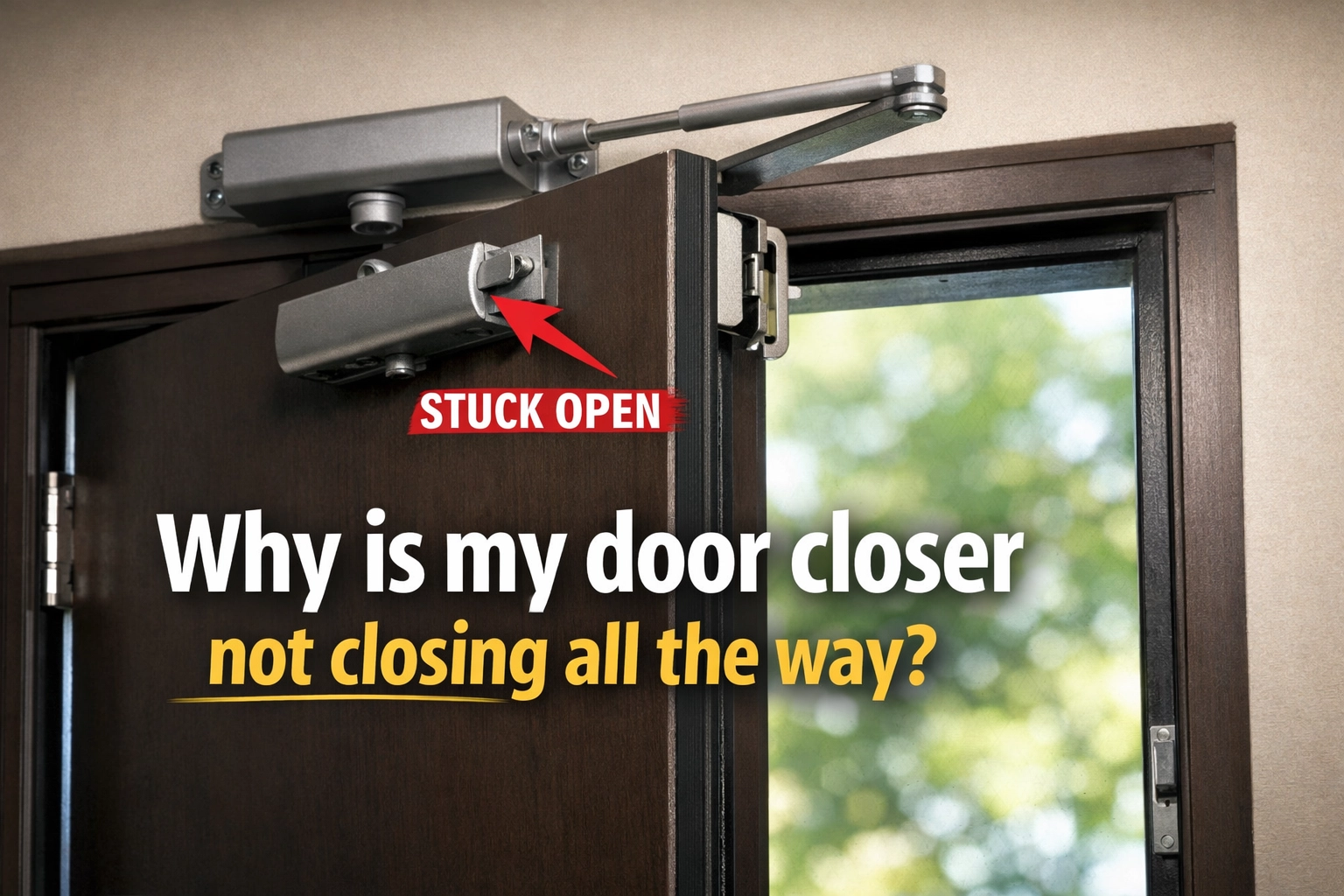
A door closer is a heavy-duty mechanical device installed at the top or side of a door to control its closing speed and ensure it latches securely after every use. In a bustling region like Toronto and the GTA, these devices are the unsung heroes of both commercial storefronts and residential complexes. They provide security, maintain indoor temperatures, and act as a critical component of fire safety systems.
However, it is a common frustration when a door: whether it’s the entrance to a retail shop in North York or a back exit of a condo in Mississauga: refuses to shut all the way. A door that hangs open by just an inch or two isn't just an eyesore; it’s a security risk and a drain on your energy bills.
If you are wondering why your door is acting up, you aren't alone. There are several technical and environmental factors at play. We’ll go over some of the most common reasons why door closers fail to finish the job and what you can do to get your entrance back in working order.
The Importance of a Fully Latched Door in Toronto and the GTA
Before diving into the "how-to" of repairs, it is important to understand the stakes. In Toronto and the GTA, we deal with extreme weather shifts. In the winter, a door that doesn't close all the way allows expensive heated air to escape and freezing drafts to enter. In the summer, your air conditioning works overtime to compensate for that same gap.
Beyond comfort, there is the matter of security. Many commercial buildings rely on electronic strikes or mag-locks that only engage when the door is fully seated in the frame. If the door closer stops short, your building is essentially left unlocked. For residential properties, a door that fails to latch can be easily pushed open by the wind or an intruder, compromising the safety of everyone inside.
1. Incorrect Speed Adjustments: Sweep vs. Latch
Most modern door closers are hydraulic, meaning they use oil and valves to control the speed of the door. If your door closes most of the way but stops just before it hits the frame, the issue is likely with the valve settings.
Door closers generally have two primary adjustment valves:
- The Sweep Speed: This controls the speed of the door from its fully open position down to about 12 to 15 degrees from the frame.
- The Latch Speed: This controls the final few inches of the closing cycle. This is the "final push" that ensures the latch clicks into the strike plate.
If the latch speed is set too slow, or if there is too much resistance at the end of the cycle, the door will lose its momentum and stop short.
What you can do:
The following is a list of things you can do to test these valves:
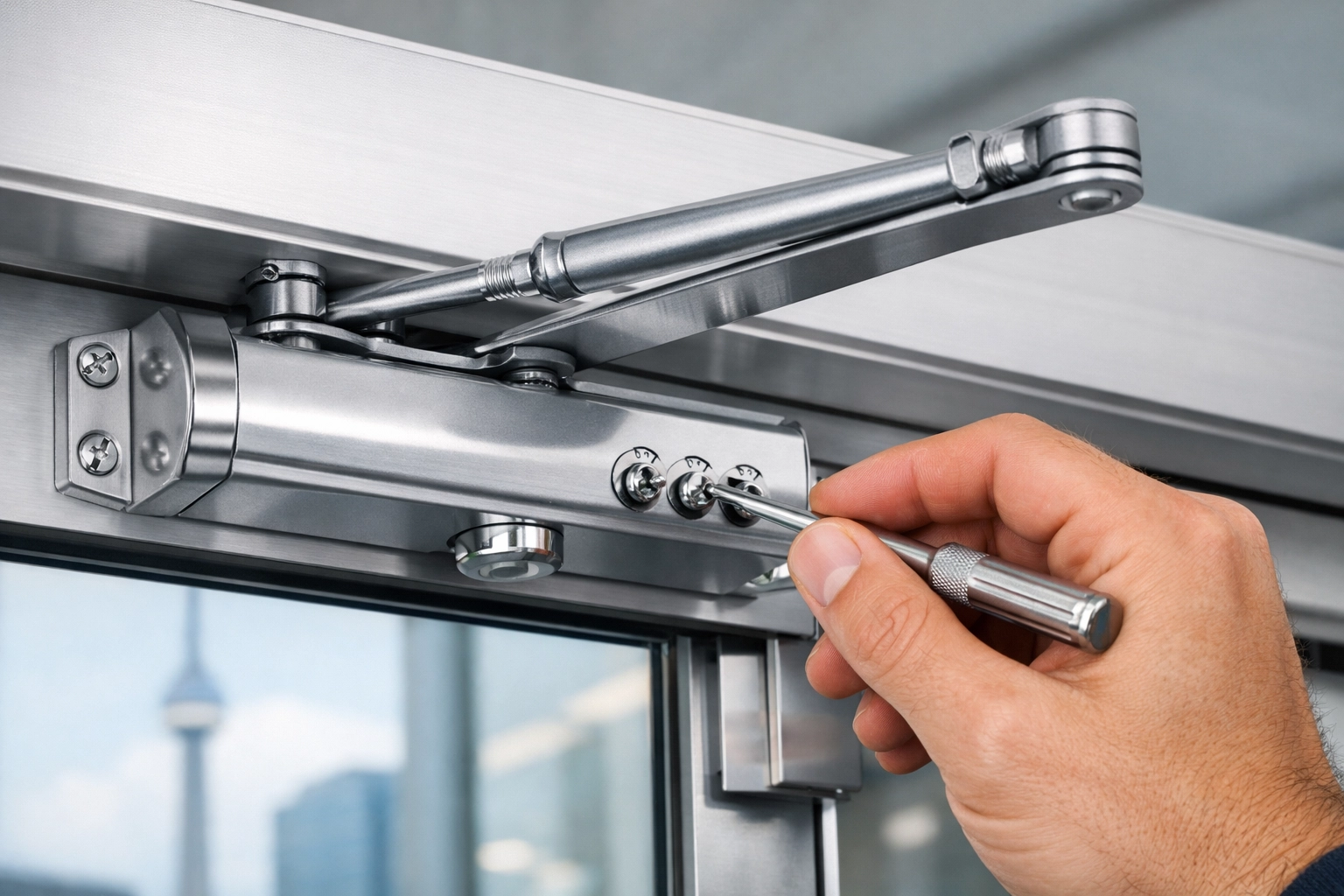
- Locate the adjustment screws on the end or side of the closer body. They are usually marked "S" (Sweep) and "L" (Latch).
- Use a screwdriver to turn the "L" screw counter-clockwise by about an 1/8th of a turn. This increases the speed for those final few inches.
- Test the door. If it still doesn't close, give it another small turn. Warning: Never unscrew these valves all the way, as the hydraulic oil will leak out, ruining the closer permanently.
2. The Closer is Undersized for the Door
Not all doors are created equal, and neither are the closers that move them. Door closers are rated by "power sizes," usually ranging from 1 to 6. A size 1 closer is meant for light interior doors, while a size 6 is designed for heavy, wide, or lead-lined doors.
In many properties across Toronto and the GTA, we see "undersized" closers installed on heavy commercial glass doors. If the internal spring of the closer isn't strong enough to overcome the weight of the door and the resistance of the latch, the door will simply stall. This is especially common in high-traffic areas where a heavy-duty closer is required but a standard residential-grade model was installed instead.
If your closer is too small, no amount of valve turning will fix the problem permanently. You likely need a hardware upgrade to a model with a higher power rating. You can view some of the sturdier options we provide on our commercial door hardware page.
3. Stack Pressure and HVAC Issues
This is a unique problem often found in Toronto high-rises and modern office buildings. "Stack pressure" occurs when there is a significant difference in air pressure between the inside and outside of a building.
If your HVAC system is pushing air out or sucking air in with high force, it creates a "wind tunnel" effect at the doorway. As the door tries to close, the air pressure acts like an invisible hand pushing back against it. You might notice the door closes fine when a window in the lobby is open, but stalls when the building is "sealed."
How to identify stack pressure:
- Open the door slightly (about 5 degrees).
- Feel for a strong draft or "pulling" sensation.
- If the air is whistling through the gap, you have a pressure issue.
In these cases, you may need a heavy-duty closer with a "Backcheck" feature or a higher power setting to force the door through the wall of air.
4. Mechanical Obstructions and Alignment
Sometimes the problem isn't the closer at all: it’s the door itself. Over time, buildings in Toronto and the GTA settle, and hinges wear down. This causes the door to sag or sit crooked in the frame.
If the door is rubbing against the frame (the "jamb"), the friction might be more than the closer can handle. Even a tiny bit of rubbing can stop a door in its tracks.
The "Finger Test":
To see if the door is the problem, you can disconnect the closer arm from the frame (usually by removing a single screw or pin). Once disconnected, try to close the door with one finger. If you feel it sticking, rubbing, or requiring force to latch, the hinges need adjustment or the frame needs to be re-aligned. If the door moves like silk, the problem is definitely the closer.
5. Worn Out or Leaking Seals
If you look at your door closer and see an oily residue or dark stains on the cover or the floor beneath it, the unit has "blown a seal." The hydraulic fluid that provides the controlled resistance is leaking out.
Once the fluid is gone, the closer loses its ability to regulate speed and power. Often, a leaking closer will either slam shut dangerously fast or lose all its "oomph" and fail to close the door the final few inches. Unfortunately, hydraulic door closers are generally sealed units and cannot be refilled easily. If it's leaking, it’s time for a replacement.
6. Cold Weather Performance
Winters in Toronto and the GTA are notoriously tough on hardware. The oil inside a hydraulic closer thickens when the temperature drops. This increased viscosity makes the door move much slower than it does in July. If your closer was adjusted during a heatwave, it might not have the power to close during a January cold snap.
Many high-quality closers use "all-weather" fluid to minimize this effect, but older or cheaper models are very susceptible to the cold. Seasonal adjustments are a standard part of maintenance for many GTA property managers.
Safety and Security Impacts
A door that fails to close is a liability. In a commercial setting, it violates fire codes. Fire doors are designed to stay closed to prevent the spread of smoke and flames. If a door closer is malfunctioning, that fire barrier is compromised.
Furthermore, for businesses, an open door is an invitation for pests and unauthorized individuals. At Revitalize Windows & Doors Inc, we emphasize that a functional door closer is your first line of defense. Whether it’s a simple adjustment or a full replacement of the commercial door hardware, ensuring a tight seal is non-negotiable for property safety.
When to Call a Professional
While some homeowners and handymen feel comfortable turning an adjustment screw, door closers are under high spring tension. If handled incorrectly, they can cause injury or further damage to the door frame. If you’ve tried adjusting the valves and the door still won't close, it’s time to call in the experts.
Revitalize Windows & Doors Inc offers mobile repair services across Toronto and the GTA. We bring the tools and the replacement parts directly to your door, saving you the hassle of trying to source specialized hardware yourself.
Our technicians can quickly diagnose if the issue is a simple valve adjustment, a mounting problem, or if the internal spring has finally snapped after years of service. We work with all major brands and styles, from surface-mounted closers to concealed overhead units.
How We Can Help
The following is a list of specific tasks we can perform to get your doors back in peak condition:
- Speed Calibration: Precise adjustment of sweep, latch, and backcheck speeds for smooth operation.
- Hardware Replacement: Swapping out failed, leaking, or undersized units for high-quality, durable models.
- Hinge and Pivot Repair: Fixing the underlying door alignment issues that prevent closing.
- Weatherproofing: Ensuring the door not only closes but seals tightly against the elements. You can learn more about this on our weatherproofing page.
- Safety Audits: Checking fire-rated doors to ensure they meet local Toronto and the GTA building codes.
Don't let a malfunctioning door compromise your security or your comfort. Our team is dedicated to providing stable, sturdy, and reinforced solutions for every entrance. We take pride in our exceptional attention to detail and our commitment to providing competitive value to our neighbors throughout the region.
If your door closer is giving you trouble, feel free to contact us directly for an assessment. We’ll make sure your doors are working exactly as they should: safe, secure, and fully closed.
See our work: https://revitalizewindowsanddoors.com/socials/