Is There a Security Glass for Storefront Windows in Toronto and the GTA?
If you own or manage a retail space, restaurant, or office storefront in Toronto or anywhere across the GTA, you’ve probably asked yourself this question at least once — usually after a smash-and-grab hits the news, or worse, after it happens to your own business. The short answer is yes: security glass exists, it works, and it’s more accessible than most business owners realize. The longer answer is that “security glass” isn’t a single product. It’s a category, and picking the right one depends on what you’re actually trying to protect against.
At Revitalize Windows & Doors, we get this question constantly from shop owners along busy retail strips, plaza tenants, and property managers who are tired of boarding up windows after every incident. So let’s walk through exactly what security glass is, the options available to storefronts in this region, what they cost, and how to figure out which one makes sense for your building.
What Counts as “Security Glass” for a Storefront?
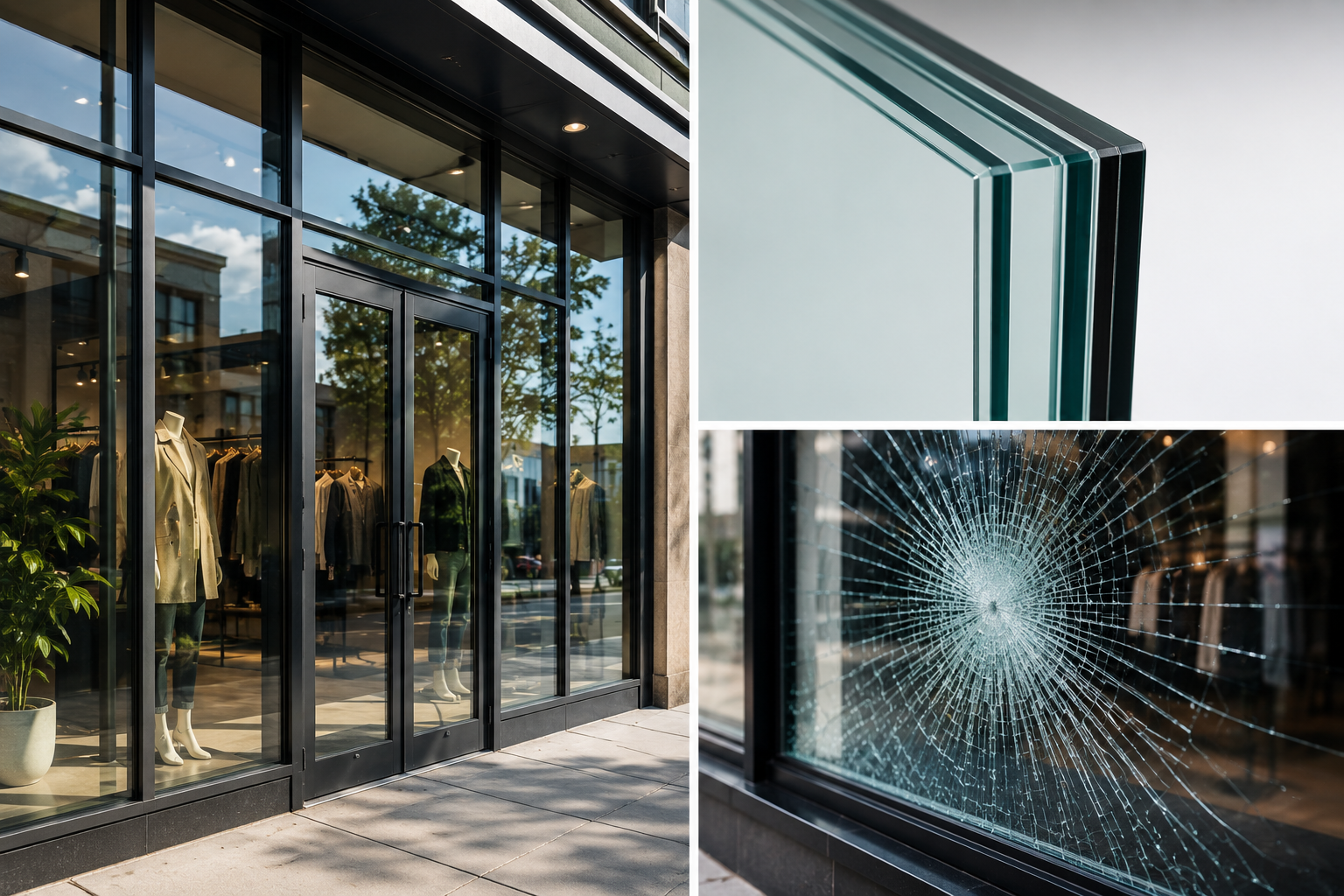
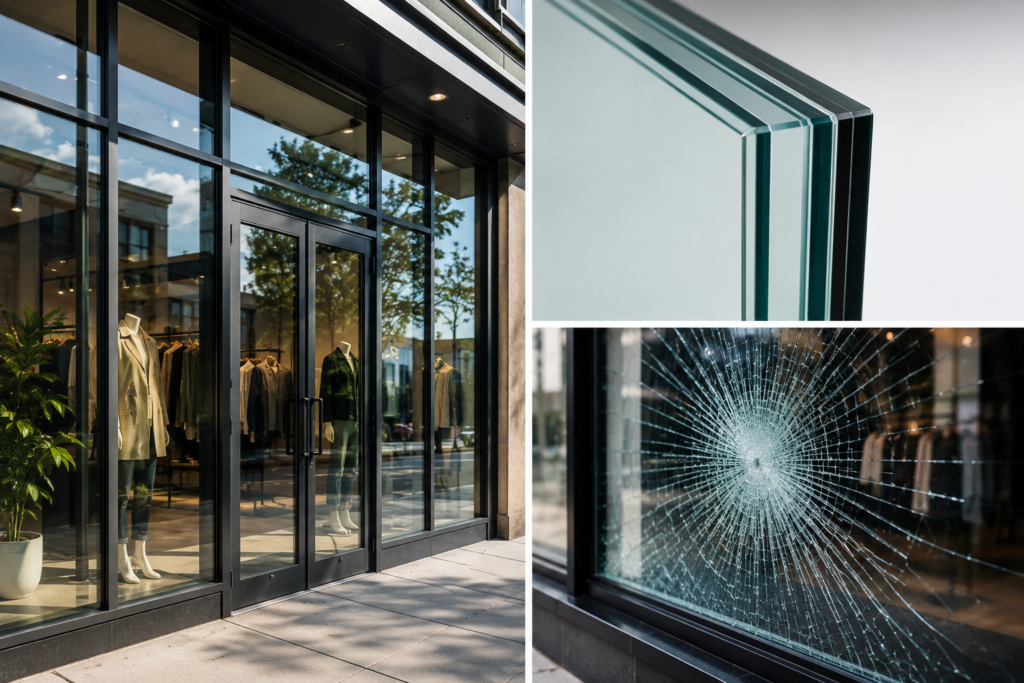
Standard storefront glass — whether it’s annealed or basic tempered glass — is built for visibility and weather resistance, not for stopping a determined intruder. A single swing of a hammer or a rock through a display window can end a night in seconds, and that’s before you factor in the cost of emergency board-up services, lost inventory, and days of lost business while you wait for a replacement pane.
Security glass is engineered specifically to resist that kind of impact. Instead of shattering into loose shards the moment it’s struck, it either holds together or requires repeated, sustained force to break through — buying time, deterring opportunistic thieves, and in many cases stopping the break-in attempt altogether. There are a few main categories worth knowing about.
Laminated Glass
Laminated glass is the most common and cost-effective security upgrade for storefronts. It’s made by bonding two (or more) layers of glass together with a tough plastic interlayer, usually PVB (polyvinyl butyral). The glass can still crack under impact, but the interlayer holds the fragments in place instead of letting them scatter across the sidewalk or your display. That means an intruder has to strike the same spot repeatedly to actually punch through, which is often enough to make them give up and move on. Laminated glass also has a nice side benefit for businesses along noisy corridors — it cuts down street noise noticeably compared to standard glass.
Glass-Clad Polycarbonate (GCP)
This is a step up in protection. Glass-clad polycarbonate sandwiches a polycarbonate core between outer layers of glass, combining the scratch resistance and clarity of glass with the near-unbreakable strength of polycarbonate underneath. It’s considerably more attack-resistant than laminated glass alone and is often the choice for jewelry stores, cannabis retailers, pharmacies, and other businesses that are frequent targets for forced entry.
Polycarbonate Panels
Pure polycarbonate (sometimes sold under names like Lexan) is essentially unbreakable by conventional means — hammers, bricks, and bats won’t get through it. It’s lightweight, which makes it easier to retrofit onto existing frames without a full structural rebuild. The trade-off is that polycarbonate scratches more easily than glass and can develop a slight haze over time if it isn’t maintained properly, so it’s best suited to businesses where maximum impact resistance matters more than long-term optical clarity.
Security Window Film
For storefronts that aren’t ready for a full glass replacement, security film is worth considering. It’s a thick polyester film applied to the interior surface of existing glass. It won’t stop a bullet or a sledgehammer, but it does a good job of holding shattered glass together after an impact, which slows down smash-and-grab attempts and reduces the mess and injury risk from flying glass. It’s also one of the more budget-friendly upgrades, and it can double as UV and solar control film, cutting glare and fading on your merchandise.
Why This Matters More in Toronto and the GTA Specifically
Retail corridors across Toronto — Queen Street West, the Danforth, Yonge Street, and plenty of strip plazas in North York, Scarborough, and Etobicoke — have all seen their share of smash-and-grab activity and vandalism over the past few years. The same goes for busy commercial strips in Mississauga, Brampton, Vaughan, and Markham, where storefronts sitting close to parking lots and high-traffic roads can be especially exposed.
There’s also a climate factor that’s easy to overlook. Toronto and the GTA go through significant freeze-thaw cycles every winter, and that thermal stress can weaken glass over time, particularly on older storefront systems where the glazing and seals haven’t been updated in years. A pane that’s already been quietly stressed by a few winters of expansion and contraction is more vulnerable to failing under an impact than a properly maintained, newer installation. Upgrading to laminated or glass-clad polycarbonate glazing at the same time you address seals and weatherproofing is often the more cost-effective move, since you’re only paying for labour and glazing work once instead of twice.
What Does Security Glass Cost Compared to Standard Glass?
This is usually the first thing business owners want to know, and it’s a fair question — security glazing isn’t cheap, but it’s rarely as expensive as people assume once they weigh it against the alternative.
- Laminated glass typically runs somewhat higher than standard tempered glass of the same size, largely due to the extra manufacturing step of bonding the interlayer.
- Glass-clad polycarbonate costs more again, reflecting the combined materials and the more involved installation.
- Polycarbonate panels vary widely depending on thickness and whether they’re retrofitted over existing glass or installed as a full replacement.
- Security film is the most affordable option upfront, though it offers less protection than a true laminated or GCP upgrade.
The real comparison isn’t security glass versus standard glass — it’s security glass versus the cost of a break-in. Emergency board-up services, rush glass replacement, stolen or damaged inventory, insurance deductibles, and days of reduced foot traffic while repairs are underway add up fast. Many business owners find that a one-time investment in the right glazing pays for itself the first time it prevents a break-in from succeeding.
Retrofitting vs. Full Replacement
One thing that surprises a lot of storefront owners is that you usually don’t need to tear out your entire frame system to upgrade to security glass. Many laminated and glass-clad polycarbonate products can be installed using the existing frame, sometimes with a retrofit adapter, which keeps costs and downtime down considerably. Full replacement is typically only necessary if the existing frame is damaged, undersized for thicker security glazing, or simply at the end of its service life anyway.
If you’re already dealing with a foggy or failed sealed unit, cracked pane, or door glass that’s rattling in its frame, that’s actually a good time to have a conversation about upgrading to security glass rather than just replacing like-for-like. You’re paying for labour either way, so it often makes sense to solve both problems in a single visit.
How to Decide What’s Right for Your Business
A few questions worth asking yourself before deciding on a product:
- What’s the realistic threat? A quiet office storefront in a low-traffic plaza has different needs than a late-night convenience store on a busy Toronto corner.
- What’s your budget and timeline? Film and laminated glass are faster and more affordable; GCP and polycarbonate are bigger investments with a bigger jump in protection.
- Do you need to preserve the exact look of your storefront? Laminated and GCP options are visually indistinguishable from standard glass, which matters if you have a heritage building or strict plaza aesthetic requirements.
- Are you dealing with an existing glass problem too? If your storefront glazing is already foggy, cracked, or poorly sealed, bundling that repair with a security upgrade saves you money.
At Revitalize Windows & Doors, we walk business owners through exactly this kind of assessment before recommending a product, because the “best” security glass really does depend on the building, the location, and the budget. We’re not going to sell you glass-clad polycarbonate if a laminated upgrade and better door hardware would solve the actual problem.
Don’t Forget the Frame and the Seal
Security glass only performs as well as the frame and hardware holding it in place. A high-strength pane in a loose, worn-out frame, or paired with weatherstripping that’s already failing, still leaves a weak point for both intruders and the elements. If your storefront door isn’t closing tightly or you’re noticing drafts around the glazing, it’s worth having that checked at the same time. We often recommend reviewing your weatherproofing and seals alongside any glass upgrade, since a properly sealed frame protects both your security investment and your energy bills through the coldest GTA winters.
Frequently Asked Questions
Is security glass required by law for storefronts in Toronto? No, there’s no general bylaw mandating security glazing for retail storefronts in Toronto or the GTA. However, certain businesses — like pharmacies, cannabis retailers, and jewelry stores — may face insurance requirements or industry-specific recommendations that effectively make it necessary.
Will security glass stop a bullet? Standard laminated or glass-clad polycarbonate security glazing is designed for impact and forced-entry resistance, not ballistic protection. True bullet-resistant glazing is a separate, UL 752-rated product category and is typically only necessary for specific high-risk applications like banks or government buildings.
Can I install security film on my own? Technically, yes, but professional installation matters here. Poorly applied film can bubble, peel, or fail to bond properly at the edges, which undermines its effectiveness right where it matters most.
How long does a security glass installation take? Most single-pane or single-door storefront upgrades can be completed in a single visit, often within a few hours, especially when the existing frame can be reused.
Does security glass affect natural light or visibility? Laminated glass and glass-clad polycarbonate maintain clarity very close to standard glass. Polycarbonate panels and thicker security films can introduce a very slight tint or haze depending on the product, which is worth discussing if display visibility is a priority.
Protecting Your Storefront Starts With the Right Glass
Break-ins and vandalism are stressful and expensive, but they’re also largely preventable with the right glazing choice. Whether you’re weighing laminated glass, glass-clad polycarbonate, or a more budget-conscious film upgrade, the goal is the same: keep your storefront looking sharp while making it a much harder target.
Here’s the corrected paragraph:
If you’re not sure which option fits your building, your budget, or your specific location across Toronto or the wider GTA, we’re happy to take a look and walk you through it in plain terms. You can learn more about our storefront glass replacement services, browse our full lineup of window and door repair services in Toronto, or reach out directly through our free quote form to get a straightforward assessment of what your storefront actually needs. Revitalize Windows & Doors has helped business owners across the region secure their storefronts without unnecessary upsells or guesswork, and we’re glad to do the same for you.

Leave a Reply