
Why Does a Commercial Door Sag Over Time in Toronto and the GTA?
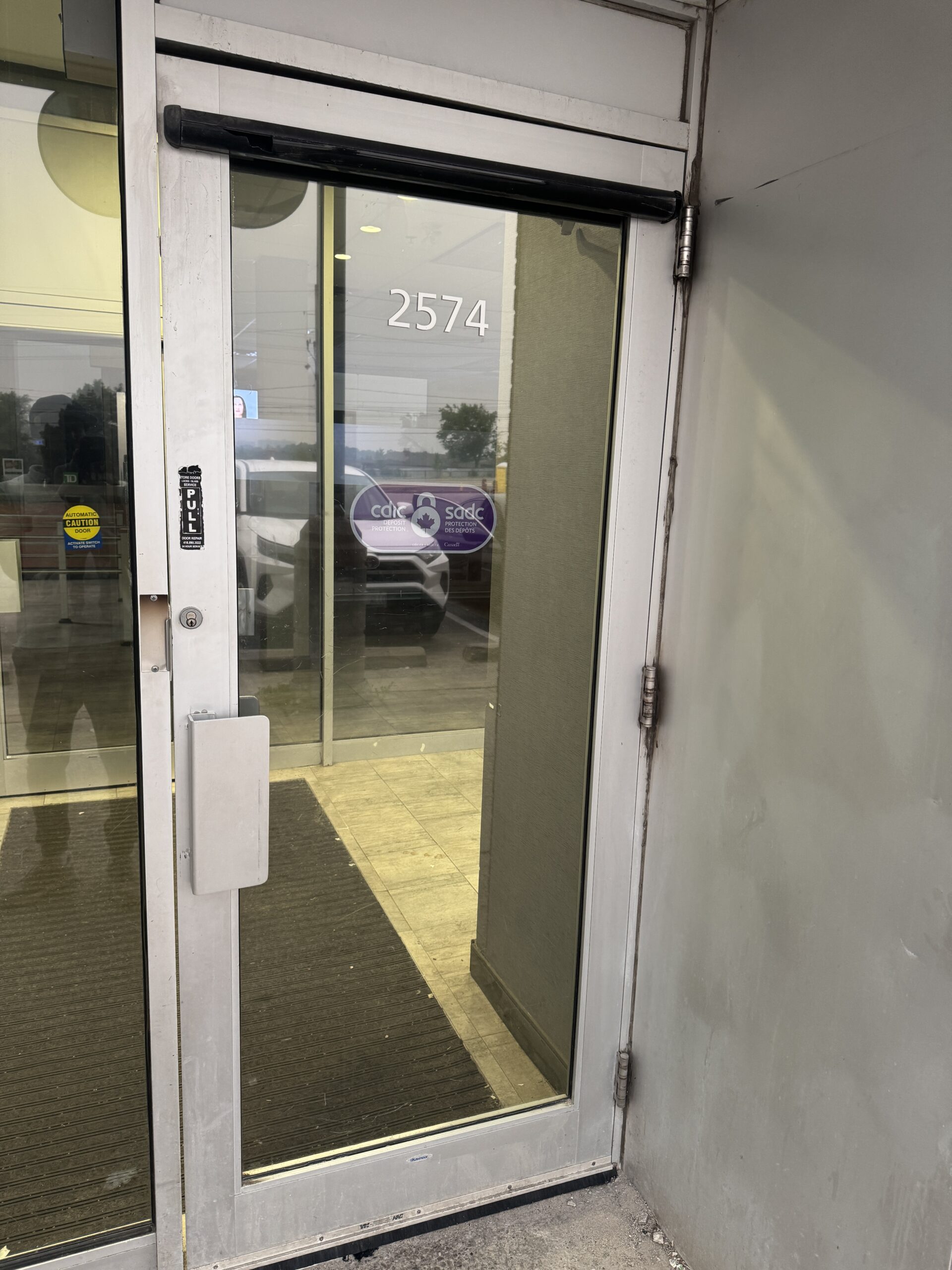
Walk up to a commercial entrance that’s a few years old and you can often tell it’s struggling before you even touch it. There’s a visible gap at the top corner, the bottom drags against the threshold, and it takes a little extra shove to get it fully closed. If that sounds familiar, your door is sagging, and it’s one of the most common issues we get called out for across commercial properties in Toronto.
At Revitalize Windows & Doors, sagging commercial doors are one of the most frequent hardware calls we handle, whether it’s a retail entrance, an office lobby door, or a heavy back-of-house access point. The good news is that sagging is almost always explainable, and fixable, once you understand what’s actually happening mechanically. If your commercial door has started sagging, our commercial door hardware services cover everything from hinge replacement to full frame reinforcement.
1. It Usually Comes Down to Weight and Time
Commercial doors are heavier than residential doors, often significantly so, especially when they’re built from solid wood, reinforced steel, or heavy-duty glass and aluminum systems. That extra weight is functional and necessary, but it also means the hardware holding the door in place is under constant, ongoing stress every single time the door opens and closes.
Over thousands of open-close cycles, even well-built hardware experiences gradual wear. Screws loosen in their holes, hinge pins wear down, and small amounts of play develop at each connection point. Individually, these changes are tiny. Collectively, over months and years, they add up to a door that visibly droops on its hinges.
2. Hinge Wear Is the Most Common Culprit
This is where sagging most often starts. Standard pivot-style hinges concentrate the door’s entire weight onto just two or three small contact points. Every open and close cycle puts stress directly on those points, and over time, the hinge pins and knuckles wear down, developing play that lets the door shift downward on its hinge side.
You’ll typically notice this first as a gap forming between the door and the frame near the top hinge, along with the door dragging or catching near the bottom on the opposite side. This uneven wear pattern is a strong sign that hinge hardware, rather than the frame itself, is the primary issue.
3. Loosened Mounting Hardware
Even well-installed hinges rely on screws anchored into the door frame, and repeated stress from thousands of cycles can gradually work those screws loose, particularly if the frame material is wood or lower-gauge metal that doesn’t hold threads as securely as it did when new.
Once mounting screws loosen even slightly, the hinge has a small amount of play it didn’t have originally, and that play translates directly into a door that sits slightly lower or more crooked than it should.
4. Frame Settling and Building Movement
Commercial buildings, like any structure, experience gradual settling over time, and that movement can very slightly shift the door frame within the surrounding wall. Even a small shift, sometimes just a few millimetres, can throw off how precisely a heavy door aligns within its frame.
This tends to be a slower, more gradual contributor to sagging compared to hinge wear, but it becomes more relevant on older commercial buildings across Toronto, where decades of minor settling have had time to accumulate.
5. Seasonal Temperature and Humidity Swings
This is a factor that matters more here than it would in a milder climate. Commercial door frames, particularly wood and certain composite materials, expand and contract with temperature and humidity changes throughout the year. Toronto’s swing from well below freezing in winter to over 30°C in summer puts real, repeated stress on both the frame and the hardware anchoring the door to it.
This constant cycling doesn’t cause sagging on its own, but it accelerates wear on hinges, mounting hardware, and frame material that’s already dealing with the mechanical stress of daily use, which is part of why commercial doors here often show sagging sooner than the same door would in a more stable climate.
6. High Traffic Speeds Everything Up
A commercial door on a busy retail entrance or office lobby might see hundreds of open-close cycles a day, compared to a fraction of that for a typical residential door. That dramatically higher usage rate means the wear processes described above happen on a much faster timeline.
This is why sagging tends to show up noticeably sooner on high-traffic commercial doors compared to lower-traffic interior or back-of-house doors, even when both were installed with the same hardware at the same time.
7. The Wrong Hinge Type for the Application
Sometimes sagging isn’t purely about wear, it’s about a mismatch between the door’s weight and traffic level and the hardware originally chosen for it. Standard pivot hinges, while perfectly adequate for lighter or lower-traffic doors, simply aren’t built to handle the sustained stress of a heavy, high-traffic commercial entrance over the long term.
In these cases, even properly maintained hardware will sag faster than expected, not because anything failed prematurely, but because the original hardware specification wasn’t matched to the door’s actual demands.
How to Tell What’s Actually Causing Your Door to Sag
A few checks can help narrow down the likely cause before calling in a professional:
- Check the gap pattern. A gap that’s wider at the top hinge side usually points to hinge wear. A gap that’s more uniform around the whole door frame suggests possible frame settling.
- Test hinge play. With the door open, gently lift and lower the door by its outer edge. Noticeable movement at the hinges points to worn pins or loosened mounting screws.
- Look at usage patterns. A door with unusually heavy daily traffic is more likely dealing with straightforward wear-and-tear sagging rather than a structural issue.
- Consider the door’s age and hardware type. Older doors, or doors using standard pivot hinges under heavy use, are the most common candidates for hardware-related sagging.
If you’re not sure which factor applies to your specific door, our window and door repair services across the GTA include hardware assessments that can pinpoint the actual cause before recommending a fix.
What Fixing a Sagging Door Actually Involves
Depending on the underlying cause, the repair can range from a quick adjustment to a more involved hardware upgrade:
Hinge tightening or shimming. In mild cases, simply tightening loose screws or adding shims behind the hinge can restore proper alignment.
Hinge replacement. Worn hinge pins or damaged hinges are often replaced outright, sometimes with continuous hinges for high-traffic doors, which distribute weight across the full height of the door rather than concentrating it at a few points.
Frame reinforcement. For doors dealing with loosened mounting points or minor frame settling, reinforcing the surrounding frame material provides a more secure anchor for the hardware going forward.
Full hardware upgrade. For doors that were originally under-specified for their traffic level, moving to heavier-duty hinges or a continuous hinge system addresses the root mismatch rather than just patching the symptom.
Key Terms Worth Knowing
Hinge Knuckle: The interlocking segments of a hinge that allow it to pivot, and a common point of wear over repeated use.
Continuous Hinge: A hinge that runs the full height of the door rather than using isolated pivot points, distributing weight more evenly and reducing wear on high-traffic doors.
Frame Settling: The gradual shifting of a building’s structure over time, which can slightly affect door and frame alignment.
Shimming: Adding thin spacers behind hardware to correct minor alignment issues without full hardware replacement.
Point Load: The concentration of weight onto a small area, such as a standard hinge pin, rather than spread across a larger surface.
Why This Shows Up So Often on Commercial Properties Across the GTA
Between high daily traffic, heavier door construction, and our region’s genuinely wide seasonal temperature swings, commercial doors across Toronto and the surrounding GTA face a combination of stress factors that residential doors simply don’t deal with to the same degree. This is exactly why sagging tends to be such a recurring maintenance item for property managers and business owners here, and why matching the right hardware to a door’s actual traffic level matters more than it might initially seem. It’s a pattern the Revitalize Windows & Doors team sees consistently across commercial properties throughout the region.
Why Choose Revitalize Windows & Doors
We’ve assessed and repaired sagging commercial doors across retail, office, and institutional properties throughout Toronto, and we always start by identifying the actual root cause, whether that’s hinge wear, frame settling, or a hardware mismatch, before recommending a fix. The team at Revitalize Windows & Doors approaches every sagging door differently, since a quick hinge adjustment and a full hardware upgrade solve very different underlying problems.
How We Can Help You Today
- Hinge inspection, tightening, and replacement for sagging commercial doors
- Continuous hinge upgrades for high-traffic entrances
- Frame reinforcement for loosened mounting points
- Full hardware assessments to match hinge type to door weight and traffic
- Ongoing maintenance plans for commercial entrances prone to heavy use
Frequently Asked Questions
How do I know if my commercial door needs new hinges or just an adjustment? If the hinges show noticeable play when you gently lift the door, or the gap pattern is concentrated near the hinge side, replacement is usually needed. Minor sagging without obvious hinge play can sometimes be corrected with tightening or shimming alone.
Will upgrading to continuous hinges fix sagging for good? Continuous hinges significantly reduce the wear pattern that causes sagging by distributing weight across the full door height, making them a strong long-term solution for high-traffic commercial doors.
Is sagging always a hardware issue, or can it be the door itself? Hardware wear is the most common cause, but in some cases, particularly on older buildings, frame settling or even warping in the door panel itself can contribute to the issue.
How often should commercial door hinges be inspected? For high-traffic entrances, an annual hardware inspection is a reasonable baseline, though doors showing early signs of sagging should be assessed sooner rather than waiting for a scheduled check.
Can a sagging door affect security or code compliance? Yes, particularly for fire-rated doors, where proper alignment and sealing are often part of code requirements. A sagging door that doesn’t close and latch fully can be both a security and compliance concern.
Ready to Get Your Commercial Door Fixed?
If your commercial entrance is dragging, gapping, or taking extra effort to close, we’re happy to assess what’s actually causing it and recommend the right fix. Contact us directly to request your free quote, and we’ll get your door operating properly again.

Leave a Reply